

 English
 Español

 Inquiry
Industry News
How to choose a Fiber Optic Splice Closure?
2026-03-06
Choosing the right fiber optic splice closure comes down to four core factors: installation environment, cable entry configuration, fiber count capacity, and sealing method. Get these right, and you'll have a closure that protects splices for 20+ years. Get them wrong, and moisture ingress or mechanical failure can bring down an entire network segment. This guide breaks down each factor with specific data to help you make the right call.
Content
- 1 What Is a Fiber Optic Splice Closure and Why Does Choosing Matter?
- 2 Step 1 – Identify the Installation Environment
- 3 Step 2 – Select the Right Closure Type
- 4 Step 3 – Determine Fiber Count and Splice Tray Capacity
- 5 Step 4 – Evaluate the Sealing Method
- 6 Step 5 – Check Cable Compatibility and Entry Diameter
- 7 Step 6 – Verify Standards Compliance
- 8 Common Mistakes to Avoid When Selecting a Fiber Splice Closure
- 9 Quick Selection Checklist
What Is a Fiber Optic Splice Closure and Why Does Choosing Matter?
A fiber optic splice closure (FOSC) is a sealed enclosure that protects fiber splices from environmental damage — moisture, dust, UV radiation, temperature swings, and mechanical stress. They are used at cable joints, branch points, and termination locations in both aerial and underground fiber networks.
A mismatched closure is one of the most common causes of fiber network failure in the field. For example, using an IP67-rated dome closure in a repeatedly flooded underground vault — which requires at minimum IP68 with 1-meter submersion for 24 hours — can result in complete splice failure within 6–18 months. The right specification prevents costly re-splicing and network downtime.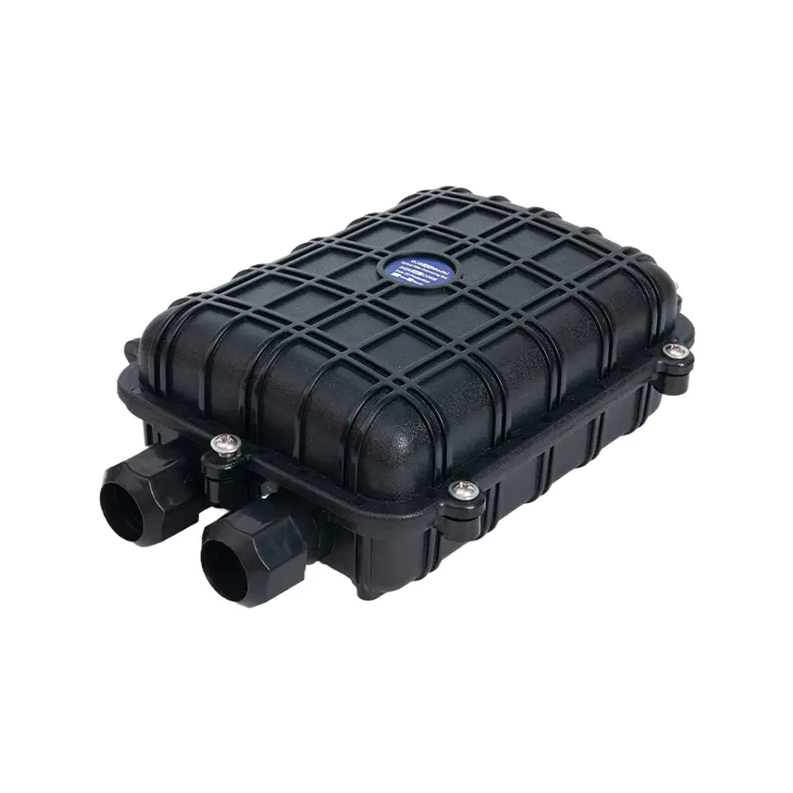
Step 1 – Identify the Installation Environment
The environment is the single most important selection criterion. It determines the required ingress protection (IP) rating, material grade, and closure form factor.
Aerial Installations
Aerial closures are mounted on poles or attached to messenger wire. They need to withstand UV exposure, wind load, and temperature cycling from -40°C to +70°C. Look for UV-stabilized polycarbonate or ABS housings and a minimum IP55 rating. Horizontal (butt) closures are the standard choice for aerial due to their ease of mounting and re-entry.
Underground / Direct Buried
Direct-buried closures must be waterproof to at least IP68 — typically rated for submersion at 1–3 meters for 24–72 hours depending on soil conditions. Dome-style closures with gel or heat-shrink sealing are widely used here. Avoid closures with bolt-sealed lids only; re-entry without damaging the seal is critical for future maintenance.
Underground Vaults and Manholes
Manholes and hand-holes are the harshest environment. These spaces can flood repeatedly, accumulate gases, and expose closures to rodent activity. Specify IP68-rated closures with mechanical sealing (compression gaskets or stainless steel banding) rather than gel-based systems, which can degrade under repeated flooding cycles.
Indoor / Building Risers
Indoor closures in conduit risers or equipment rooms require lower ingress protection (IP20 or IP44 is often sufficient) but may need to meet fire-retardancy standards such as UL 94 V-0 or IEC 60332. Compact inline or tray-based closures are typical here.
Step 2 – Select the Right Closure Type
Fiber optic splice closures come in three principal form factors. Each suits different deployment scenarios:
| Closure Type | Best Environment | Max Fiber Count (Typical) | Re-Entry |
|---|---|---|---|
| Dome (Vertical) | Underground, Direct Buried | Up to 288 | Moderate |
| Horizontal (Butt) | Aerial, Pole, Duct | Up to 576 | Easy |
| Inline | Duct, Building Riser | Up to 144 | Easy |
Dome closures use a base-and-dome design sealed with a compression nut or clamp ring. They offer excellent IP68 waterproofing and work well in high-moisture environments. The drawback: accessing the internals requires unscrewing the dome, which can be cumbersome in confined vaults.
Horizontal (butt) closures have a cylindrical shell that splits lengthwise, making splice tray access fast and easy. This makes them favored for aerial deployments where technicians work on poles with limited time and space.
Inline closures allow cables to pass straight through both ends, making them ideal for mid-span cable joints in duct systems or building risers. They typically offer the most compact footprint.
Step 3 – Determine Fiber Count and Splice Tray Capacity
Always size the closure for at least 25–50% more fibers than currently needed. Network expansions are common, and re-opening a buried closure to swap in a larger unit is expensive and disruptive.
Key capacity metrics to check:
- Number of splice trays: Each standard tray holds 12–24 splices (fusion or mechanical). A 48-fiber splice point needs a minimum of 2–4 trays.
- Cable ports: Count the number of cables entering and exiting. A branching point with 1 feeder and 4 distribution cables needs at least 5 ports. Most dome closures offer 3–6 ports; horizontal closures can have 8 or more.
- Tray stacking height: In dome closures especially, the internal tray stack height limits how many trays fit — typically 6–12 trays in a standard dome unit.
For FTTH (fiber to the home) distribution points, closures handling 48–96 fibers with 4–6 ports are typical. For backbone or feeder cables, 144–576 fiber capacity with 8–12 ports is more common.
Step 4 – Evaluate the Sealing Method
The sealing system determines both the ingress protection level and how easy the closure is to re-enter in the future. The three primary methods are:
Gel Sealing
Gel (or grease) sealing fills the cable entry ports with a semi-solid compound that conforms to irregular cable shapes. It provides reliable IP68 performance and is easy to install. However, gel can dry out or attract debris over time, and re-entry requires cleaning, which adds maintenance time. Best suited for permanent or low-re-entry deployments.
Mechanical / Compression Sealing
Compression gaskets and rubber grommets seal the cable ports when tightened with screws or clamp rings. These allow tool-free or low-effort re-entry and do not leave residue. They are ideal for vaults and manholes where the closure may be accessed several times per year. Rated up to IP68 when properly installed.
Heat-Shrink Sealing
Heat-shrink tubing with adhesive lining is applied over cable entries with a heat gun. Once applied, it creates a permanent, highly reliable seal. The trade-off is that re-entry requires cutting the shrink tubing, making it suitable only for splice points that will rarely — if ever — be revisited. Often used for submarine or critical infrastructure applications where long-term hermeticity is the top priority.
Step 5 – Check Cable Compatibility and Entry Diameter
Not all closures accept all cable types. Before purchasing, verify the following:
- Cable outer diameter range: Most closures accept cables from 5 mm to 25 mm, but some dome closures only support cables up to 16 mm. Armored cables often have larger diameters and require specific port kits.
- Cable type: Flat drop cables, round loose-tube cables, and ribbon cables each have different entry requirements. Confirm the closure supports your specific cable geometry.
- Strength member anchoring: Armored or self-supporting cables need strength member anchors inside the closure to prevent tension from reaching the splice trays. Ensure the closure has compatible anchoring hardware.
Step 6 – Verify Standards Compliance
Reputable closures are tested against internationally recognized standards. When evaluating a product, look for compliance with:
| Standard | What It Covers | Why It Matters |
|---|---|---|
| IEC 61753-1 | Performance of fiber optic interconnecting devices | Ensures optical performance under environmental stress |
| IEC 60529 (IP Rating) | Ingress protection against dust and water | Defines actual waterproofing level for underground use |
| GR-771-CORE | Generic requirements for fiber optic splice closures | Widely referenced in North American telecom deployments |
| EN 50411 | European standard for splice closures and protective housings | Required for deployments across EU networks |
A closure listing IP68 compliance without a reference to IEC 60529 testing methodology should be treated with caution. Always request third-party test reports from suppliers for critical deployments.
Common Mistakes to Avoid When Selecting a Fiber Splice Closure
- Underestimating fiber growth: A closure sized exactly for today's fiber count will require costly replacement as capacity expands. Always plan for at least 50% headroom.
- Ignoring re-entry frequency: If a splice point will be accessed quarterly for maintenance or new drops, a heat-shrink-sealed closure is impractical. Match the sealing method to your operational model.
- Choosing IP67 for flooded vaults: IP67 covers 30-minute submersion at 1 meter. Many underground vaults experience sustained flooding well beyond this. IP68 with specific depth and duration ratings is non-negotiable in these conditions.
- Overlooking bend radius management: Fiber cables have a minimum bend radius (typically 20× the cable diameter for installation, 10× for long-term). Closures with inadequate internal routing guides cause micro-bend losses and eventual fiber failure.
- Skipping field sealing kits: Many closures require field-installable port sealing kits for unused ports. Leaving open ports — even capped — can compromise the IP rating over time in harsh environments.
Quick Selection Checklist
Use this checklist before finalizing a fiber optic splice closure purchase:
- Confirm installation environment: aerial, underground duct, direct buried, vault, or indoor
- Determine required IP rating: IP55 (aerial) / IP67 (occasional submersion) / IP68 (continuous submersion)
- Count total fibers today and add 50% for growth — select a closure that meets or exceeds this number
- Count cable entries (ports) needed including spares for future cables
- Measure cable outer diameters and confirm compatibility with the closure's port kit range
- Select sealing type: gel (permanent), mechanical/compression (frequent re-entry), or heat-shrink (very permanent)
- Verify compliance with IEC 60529 and relevant regional standards (GR-771, EN 50411)
- Confirm internal bend radius guides accommodate your cable specifications
- Check that strength member anchors are included for armored or self-supporting cables
- Request third-party test reports for IP rating and environmental performance

get in Touch

No.255 Lianfei Road, KandunIndustrial Park, Cixi City, ZhejiangProvince, China
Product Center
contact details
-
Email: [email protected]
-
Tel: +86 18367407397
Mobile
Copyright ? Ningbo Goshining Communication Technology Co., Ltd. Fiber Optic Solutions Manufacturer Fiber Optic Products Factory
