English
 Español

 Inquiry
Two patch cords sit side by side on a bench: same yellow jacket, same SC housing, same three-metre length. One is rated for a 10 km metro span; the other is a multimode assembly that will not keep a long-haul port lit. Neither is defective. They are simply different fiber optic types, and the label on the bag does not always make that clear.
Fiber optic types fall into three independent families: the fiber itself, the cable construction that protects it, and the connector and interface that terminate it. A part number is only complete when all three are stated. Buyers who compare on connector shape alone end up with cable that fits mechanically but fails the link budget.
Content
What "Fiber Optic Types" Actually Covers
There is no single fiber optic type list, because three classification systems run in parallel and each answers a different question.
- Fiber mode and grade: how many modes the glass guides and how far the signal travels, from OS2 single-mode to OM1 through OM5 multimode.
- Cable construction: how the fiber is protected and where it may be installed, including loose-tube, tight-buffered, armored, aerial, drop and plenum-rated designs.
- Termination type: how the fiber is connected, including SC, LC, FC, ST, MPO/MTP and E2000 housings in UPC or APC polish.
A specification such as "OS2, 12-fiber loose-tube armored, SC/APC" is not redundant wording; it is one value from each family. Drop any one of them and the purchase order becomes ambiguous.
Single-Mode vs Multimode: The Type That Sets Distance
Single-mode carries one guided mode in a 9 µm core and is the only choice for links beyond roughly 500 m; multimode carries many modes in a 50 µm or 62.5 µm core and is the economical choice for short reaches and high port counts.
The transceiver usually makes the decision, not preference. A 10GBASE-LR port expects single-mode at 1310 nm and a 10GBASE-SR port expects multimode at 850 nm, and mixing the two gives no link at all.
| Type | Core / cladding | Typical wavelength | 10G reach | Jacket colour |
|---|---|---|---|---|
| OS2 single-mode | 9 / 125 µm | 1310 / 1550 nm | 10 km and beyond | Yellow |
| OM1 | 62.5 / 125 µm | 850 / 1300 nm | 33 m | Orange |
| OM2 | 50 / 125 µm | 850 / 1300 nm | 82 m | Orange |
| OM3 | 50 / 125 µm | 850 nm VCSEL | 300 m | Aqua |
| OM4 | 50 / 125 µm | 850 nm VCSEL | 400 to 550 m | Aqua or violet |
| OM5 | 50 / 125 µm | 850 to 953 nm | 400 m, less with SWDM | Lime green |
Two traps show up in audits. First, 50 µm and 62.5 µm multimode share the name but not the core diameter, and mating them adds loss that a short test link can hide. Second, OM3 and OM4 often share a jacket colour, so the grade has to be read from the print on the cable rather than from the sheath.
 SC/UPC to SC/UPC Single-Mode Simplex Fiber Optic Patch CordSingle-mode simplex patch cord with SC/UPC connectors on both ends, suited to data center, enterprise, and telecom patching where flexible installation in tight spaces matters.View Product →
Cable Construction Types: Where the Fiber Is Allowed to Live
Outdoor routes call for loose-tube construction, indoor risers call for tight-buffered or plenum-rated cable, and the transition between the two belongs inside a closure, not in free air.
Construction also sets the mechanical limits. Loose-tube cable tolerates pulling tension because the fibers sit in a gel-filled tube with room to move; tight-buffered cable terminates more easily but has less bend margin. Armored versions add corrugated steel for rodent and crush protection.
- Aerial and power routes: ADSS for self-supporting spans, OPGW inside the earth wire, OPLC for hybrid power and data.
- Duct and direct burial: GYTS, GYTA, GYTA53 and GYXTW, selected by armoring and moisture-barrier layers.
- FTTH drop and indoor: GJYXFCH drop cable with a steel messenger, and GJFTH for indoor distribution.
- Fire-rated indoor runs: riser and plenum jackets where local code applies.
The layer stack behind these families, and where each one is normally deployed, is broken down in this guide to fiber optic cable construction.
Connector Types: SC, LC, FC, ST, MPO/MTP and E2000
LC is the default where rack density matters, SC remains the field-proven choice in access and outside-plant work, and MPO/MTP is the only practical option once you terminate eight or more fibers at a time.
| Connector | Ferrule | Latch | Typical use |
|---|---|---|---|
| SC | 2.5 mm | Push-pull square | Access networks, ODF, outside plant |
| LC | 1.25 mm | Small form factor | Data centres, high-density panels |
| FC | 2.5 mm | Threaded | Test equipment, legacy racks |
| ST | 2.5 mm | Bayonet twist | Legacy multimode LANs |
| MPO/MTP | MT ferrule | Push-pull | 8 to 24 fiber ribbon trunks |
| E2000 | 1.25 mm | Shuttered | Laser-safe exposed panels |
APC and UPC: the polish that changes the end face
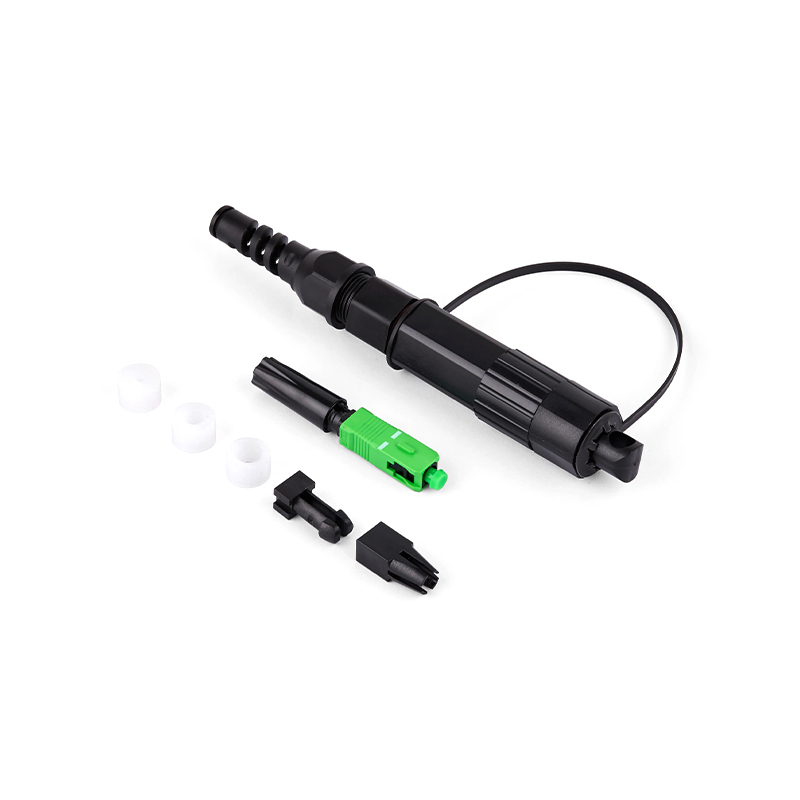
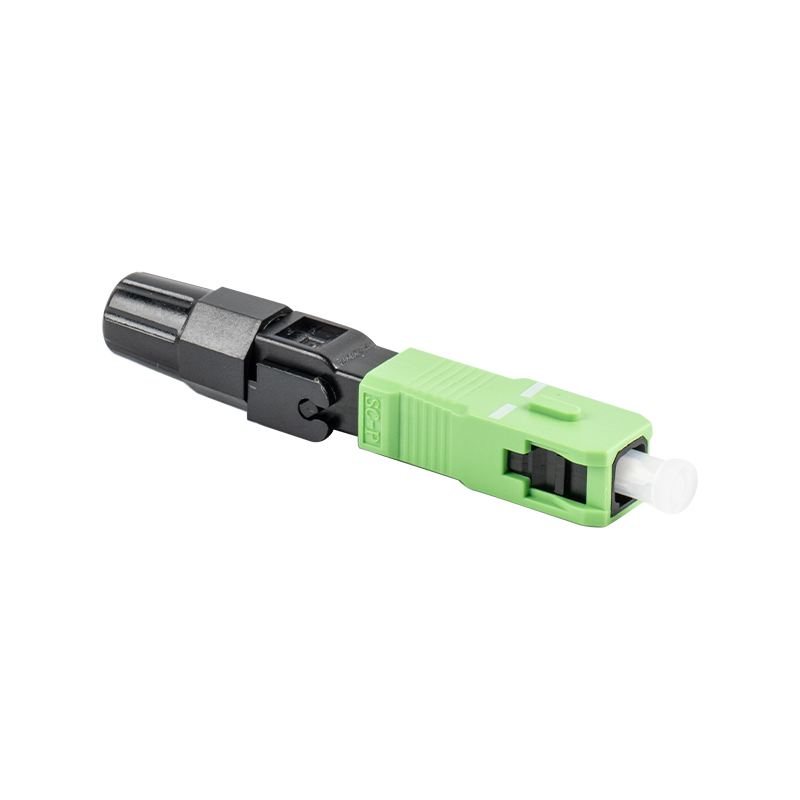
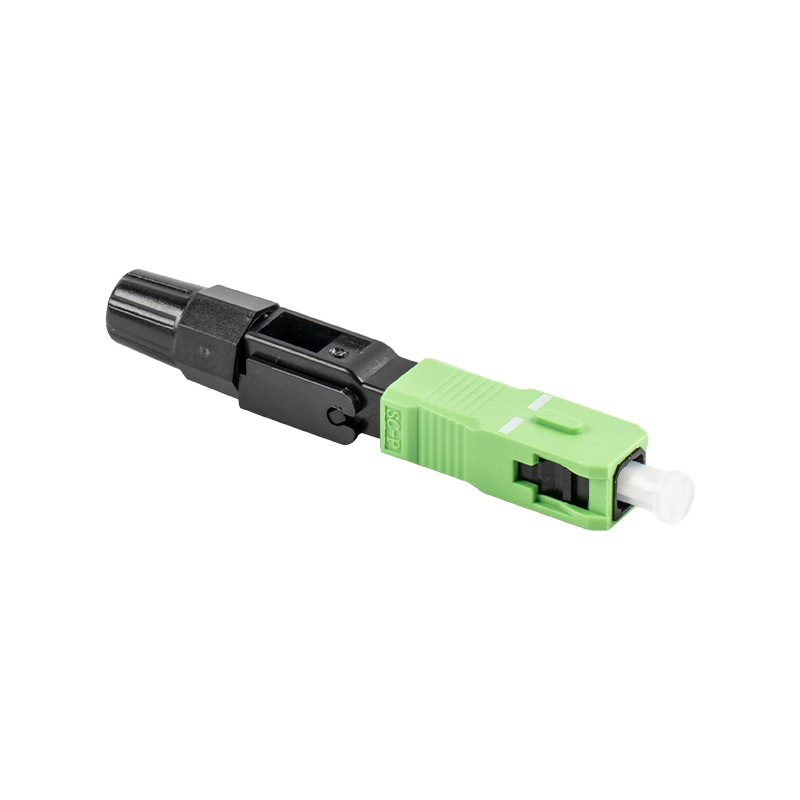
APC ends are angled at 8 degrees with return loss specified better than 60 dB, while UPC ends are flat and typically better than 50 dB. The angled contact reduces back reflection for analogue video and high-power links, but an APC plug must never be mated to a UPC adapter: the physical contact is wrong and both end faces can be damaged. Green means APC, blue means UPC.
Matching Types to Network Layers
Each layer of an access network uses a different combination of types, and the combination is best fixed at design stage rather than re-decided on site.
- Feeder layer: OS2 single-mode in high-count loose-tube cable, spliced inside closures, with APC where return loss matters.
- Distribution layer: ODF panels plus rack-mountable or cassette splitters, linked by single-mode patch cords.
- Drop layer: pre-connectorized assemblies that remove field splicing at the subscriber end.
On the distribution side, split ratio interacts directly with the optical budget. A 1x8 splitter consumes roughly 10.5 dB, so the remaining margin decides whether a drop can reach 200 m or 2 km. Cassette-format splitters are popular for exactly this reason, because they slide into standard ODF slots and keep the splitter on the same footprint as the patch panel.
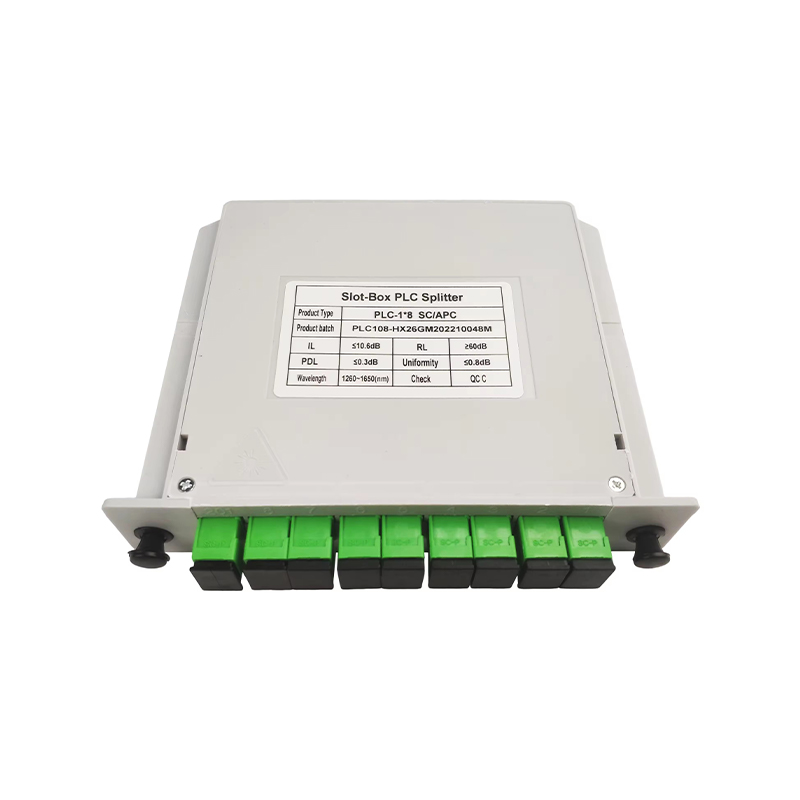 GSG-LGX-1x8-SC APC LGX Cassette Fiber Optic PLC Splitter1x8 PLC splitter in an LGX cassette with SC APC connectors, designed to fit standard ODF slots and support distribution-side optical budgeting in fiber networks.View Product →
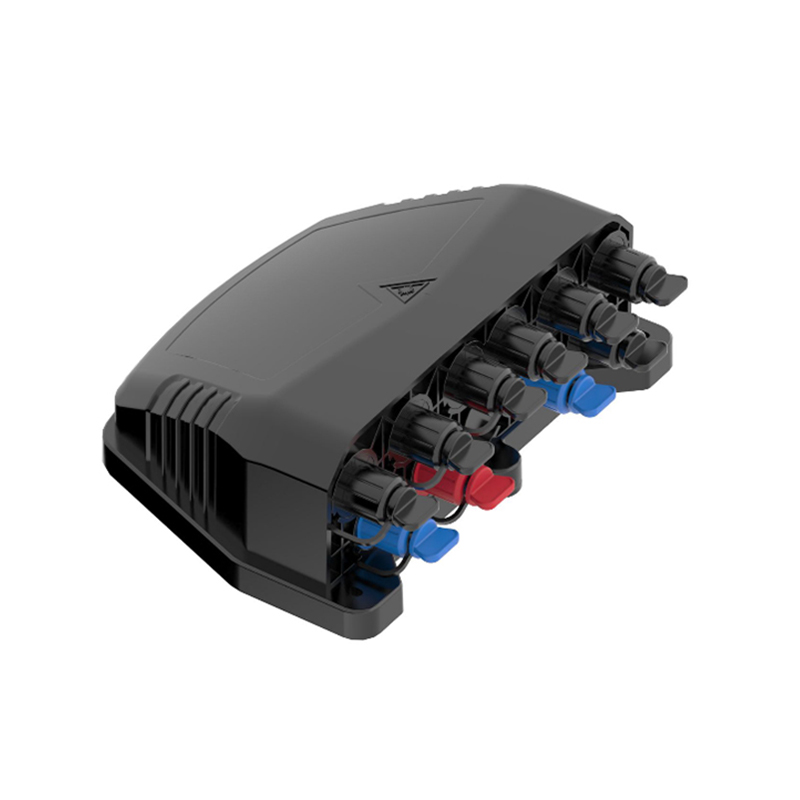
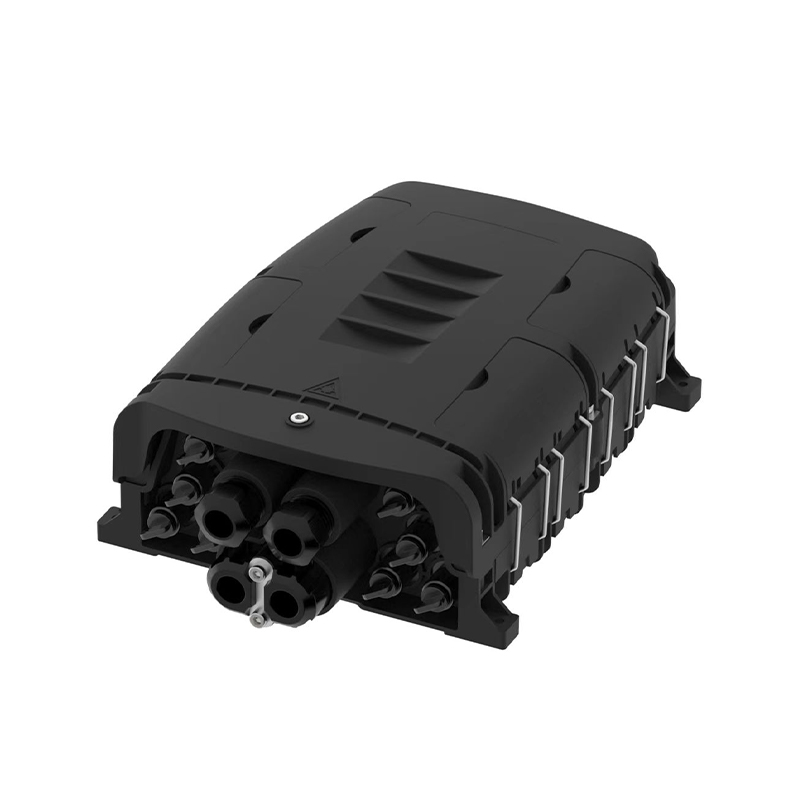
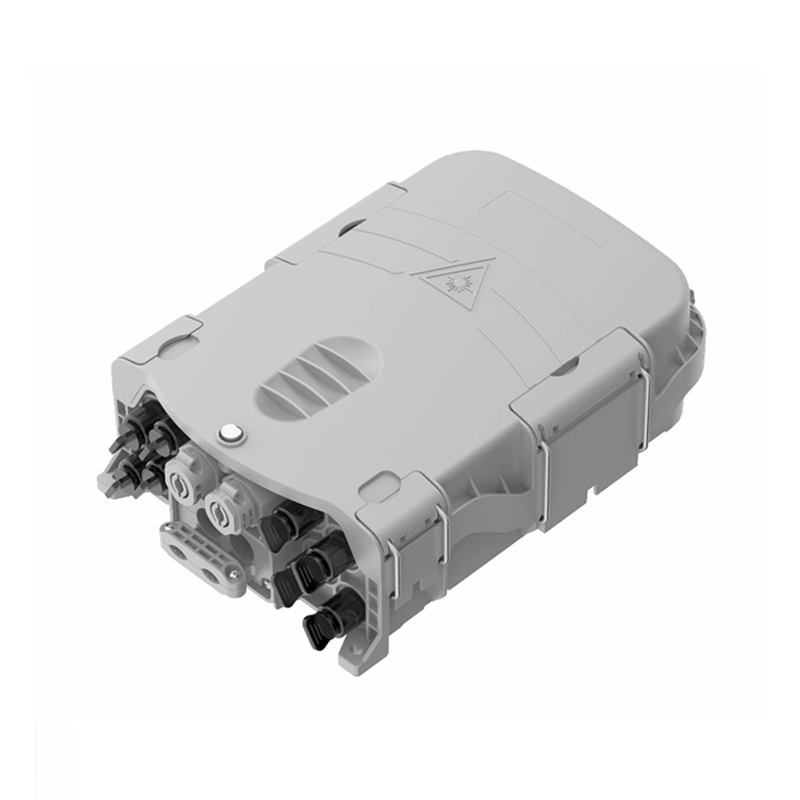
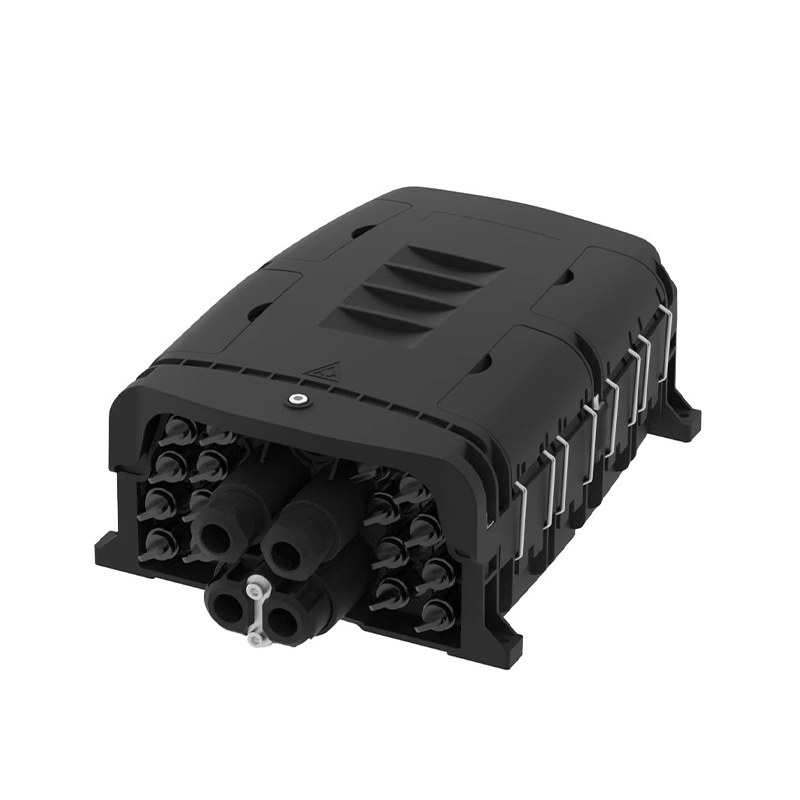
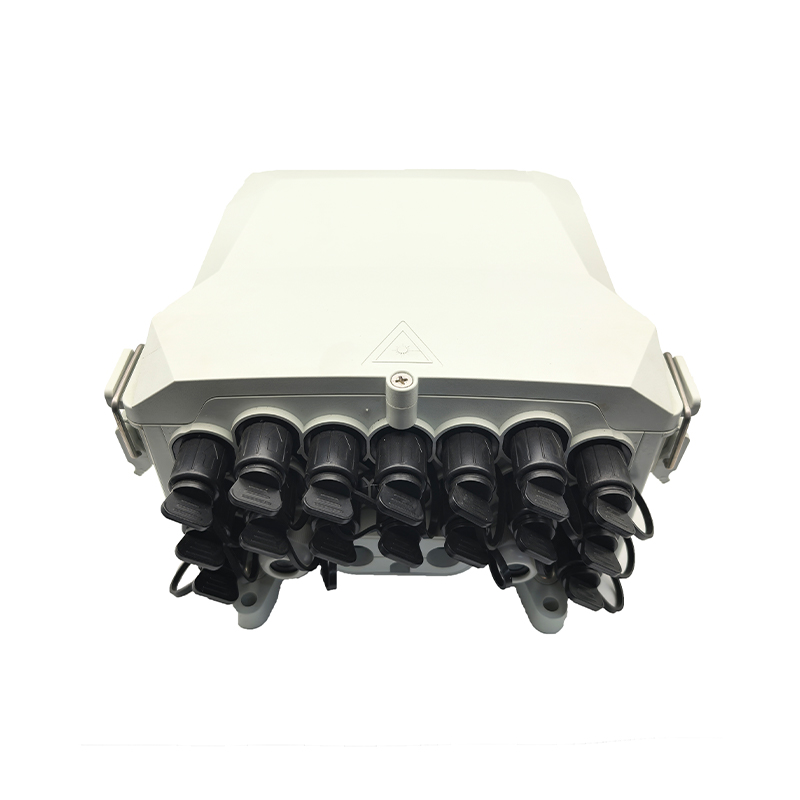
On the drop side the environment dominates. Underground and pole-mounted enclosures need sealed housings and hardened connectors, which is the idea behind a pre-connected, weatherproof unit where the distribution cable, the splitter output and the drop cords meet in one place.
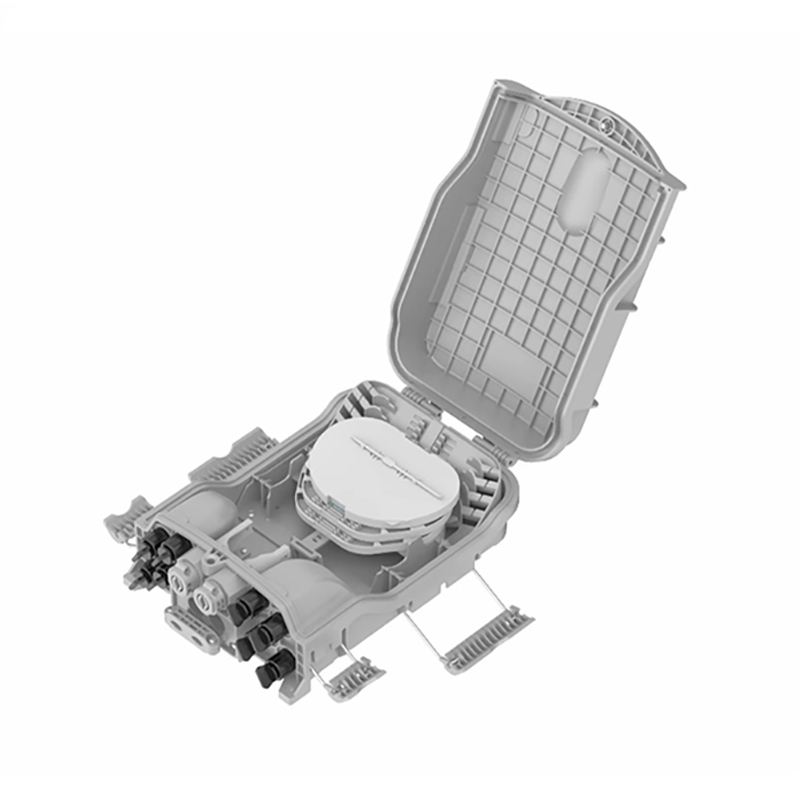 Pre-connected NAP Box GSG08B for Waterproof Fiber Optic ODNWaterproof pre-connected NAP box in PC+ABS, sized 300×200×95 mm, serving as a hub for fiber cable organization in underground or pole-mounted ODN deployments.View Product →
The wider pre-connectorized ODN approach takes that further by shipping the box, the hardened connectors and the drop cable as one tested assembly.
Specialty Fiber Types and Where They Fit
Several fiber types exist because a network has jobs other than carrying Ethernet frames.
- Bend-insensitive single-mode (G.657): tolerates tighter coils, which helps in cramped distribution boxes and wall outlets.
- Polarization-maintaining fiber: keeps polarization stable for sensing and interferometry.
- Erbium-doped fiber: the gain medium inside optical amplifiers rather than a transmission path.
- Plastic optical fiber: large core, easy field termination, short reach in vehicles and industrial control.
- Hardened waterproof assemblies: ordinary glass inside a reinforced housing, for places a standard connector would not survive.
None of these replace the mainstream types. They are specified when the application itself is unusual, and they usually cost more per metre or per connector, so they do not belong on a general stock list.
FAQ
What is the most common fiber optic type in new access networks?
OS2 single-mode. From the central office through the splitter to the drop, single-mode removes distance limits and matches the optics used by passive optical networks.
Can single-mode fiber be connected to multimode fiber?
Not usefully. The core diameters differ by a factor of five, so most of the light is lost at the joint and the link fails or becomes unreliable. Adapters for this pairing exist for mechanical reasons only.
Is APC always better than UPC?
Only where return loss matters. APC gives better back-reflection performance, but UPC is cheaper, easier to clean and sufficient for most digital links. The rule that always applies is never to mate an APC end with a UPC end.
Which multimode grade should a distributor stock?
OM4 covers most 10G and 40G requirements at 850 nm and stays backward compatible with OM3. Stocking OM4 plus OS2 covers the majority of orders without keeping four separate reels.