English
 Español

 Inquiry
A high density fiber optic cable is a cable built to fit more fibers into the same duct, tray or conduit than a conventional design. The number that actually matters is not the fiber count printed on the drum, but how many fibers can be routed through a duct of a given inner diameter, and how much of that duct one cable consumes once it is installed.
That difference shows up in the budget long before it shows up in the link budget. Fewer ducts, narrower trenches, less tray steel and shorter installation windows all follow from packing more fibers into a smaller cross-section. The trade-offs are just as real: tighter minimum bend radii, different splicing methods, and closures or panels that must match the cable you selected.
Content
What Actually Makes a Fiber Optic Cable High Density
Density is a packaging result, and it comes from three design choices that are normally combined rather than used alone.
- Smaller fiber geometry. Dropping the coating diameter from 250 µm to 200 µm lets a tube or ribbon carry roughly 30 to 40 percent more fibers without growing in size.
- Ribbon and rollable ribbon cores. A flat ribbon carries 12 fibers side by side and ribbons stack into a rectangular core. Rollable ribbon bonds only part of the matrix, so those 12 fibers roll into a denser, rounder core and can still be spliced one fiber at a time when needed.
- Dry water blocking. Water-swellable yarns and tapes replace flooding gel, which permits tighter tube fills and removes the cleaning step before splicing.
The numbers are easy to check. A classic 288-fiber stranded loose tube cable often measures 14 to 18 mm across. A ribbon design using 200 µm fiber for the same 288 fibers can land between 10 and 13 mm, and rollable ribbon constructions squeeze several hundred to well over a thousand fibers into a cable that still fits a standard 40 mm duct. On a congested route, that gap decides whether one pull is enough or whether the job needs a second duct.
Why Density Pays Back on Real Routes
Density is a cost lever rather than a technical curiosity, because the expensive part of a fiber route is usually the civil work, not the glass.
- Duct and trench capacity. A duct that is already half full leaves little room for growth. A denser cable buys back that margin and can postpone new duct in congested metro areas.
- Data center pathways. A smaller overall diameter and better bend performance reduce tray volume and leave more room for airflow overhead.
- Installation labour. One high-count pull can replace several smaller pulls, cutting reel handling, splice points and site time.
- Cheap future capacity. Buying 144 fibers where 96 are needed today normally costs far less than adding duct later, provided the cable still fits the route and the closures can take the count.
The counterweight is handling. High-count ribbon cables are stiffer, carry a minimum bend radius that must be respected during pulling, and usually need ribbon splicing rather than single-fiber splicing to keep labour time reasonable.
Construction Types Compared
| Construction | Typical fiber count | Typical cable OD | Where it fits |
|---|---|---|---|
| Stranded loose tube, 250 µm fiber | 12 to 288 | 9 to 18 mm | General outdoor duct, aerial and backbone work |
| Stranded loose tube, 200 µm fiber | 96 to 576 | 8 to 15 mm | Congested ducts that need more capacity in the same bore |
| Flat ribbon, 12-fiber ribbons | 144 to 864 | 12 to 25 mm | Metro and long-haul routes using mass fusion splicing |
| Rollable ribbon | 288 to 1728 | 14 to 28 mm | Data centers and dense backbones with tight trays |
| Air-blown microcable | 12 to 288 | 3 to 8 mm | Microduct access and metro links installed by blowing |
The table is a starting point, not a shortlist. The installation method decides almost as much as the fiber count: a cable that pulls easily may be awkward to blow, and a ribbon that splices quickly in a vault can be slow to terminate in a rack.
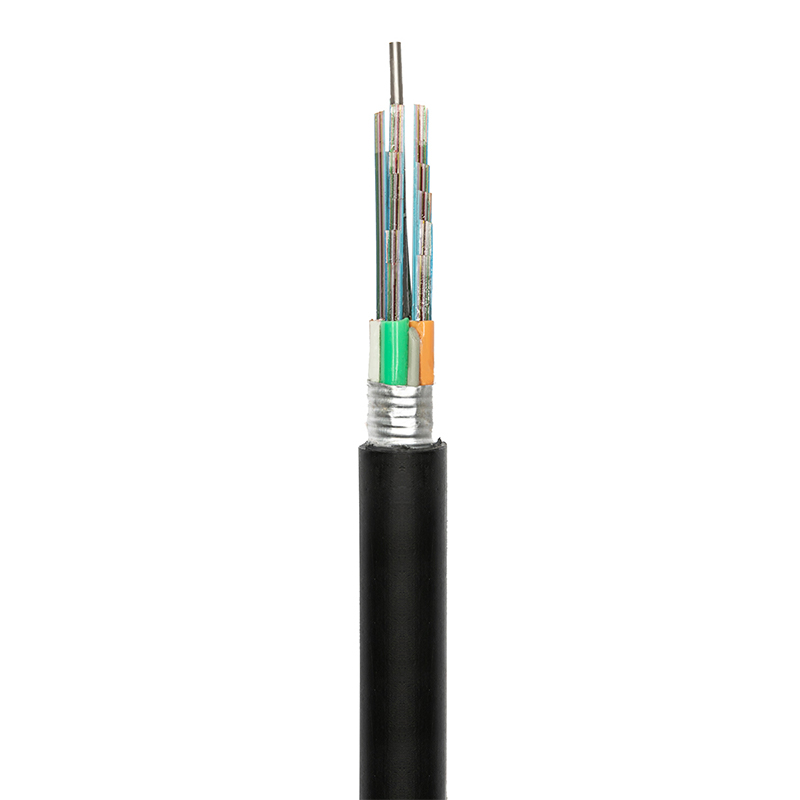 GYTA Outdoor Armored Fiber Optic CableCompact, lightweight outdoor armored GYTA cable suited to overhead, duct, or underground installation and quick connection or removal.View Product →
Specifications to Verify Before You Order
Once the construction is settled, the purchase order still needs a set of numbers that pin down performance, handling and compliance.
| Specification | What to confirm | Why it matters |
|---|---|---|
| Attenuation | About 0.36 dB/km at 1310 nm and 0.22 dB/km at 1550 nm for G.652.D | Sets reach and link budget directly |
| Bend performance | G.657.A2 or better, roughly 0.5 dB added loss for one turn at a 7.5 mm radius | Governs tight trays, corners and closure entries |
| Cable OD against duct ID | Fill ratio near 50 to 60 percent at installation | Controls pulling tension, jamming risk and growth |
| Tensile and crush | Short-term and long-term ratings in newtons; crush in N per 100 mm | Decides whether to pull, blow or suspend the cable |
| Jacket and fire rating | HDPE or PE outdoors, LSZH indoors, plus any required CPR class | Code compliance and indoor routing |
| Water blocking | Dry versus gel filled, plus tube fill ratio | Affects splice preparation time and long-term reliability |
Ask for per-fiber attenuation results, OTDR traces and a length tolerance with the shipment. On a 288-fiber cable, one bad tube found on site costs far more than the test report costs at the factory. For background on how these parameters are defined, the site's overview of fiber optic cable construction covers the same ground in more detail.
Where the Cable Meets the Rest of the Network
A dense cable only pays off if the hardware at both ends absorbs the fiber count without becoming the bottleneck.
Splice closures
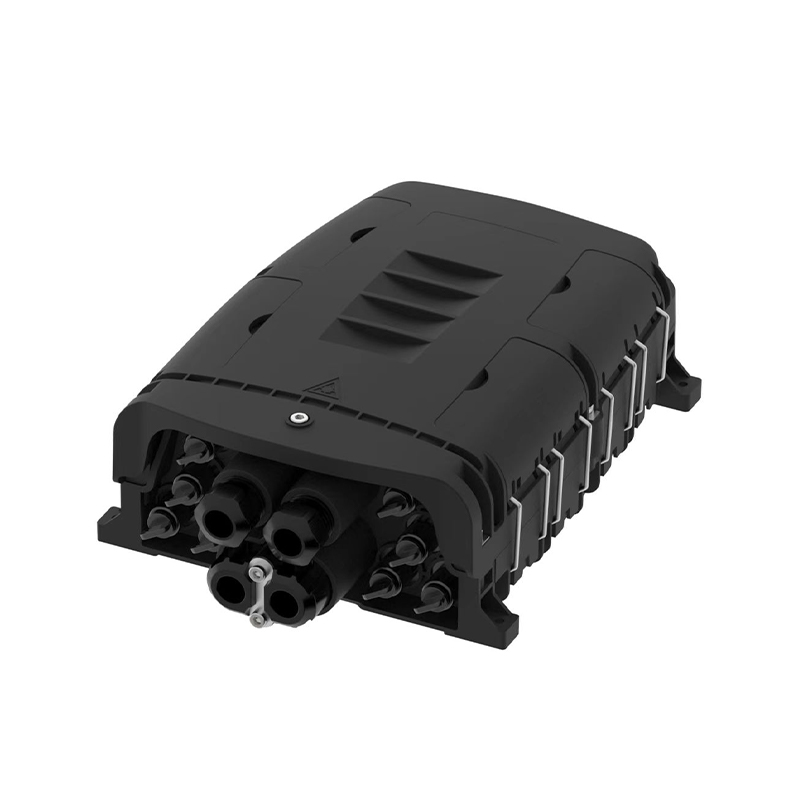
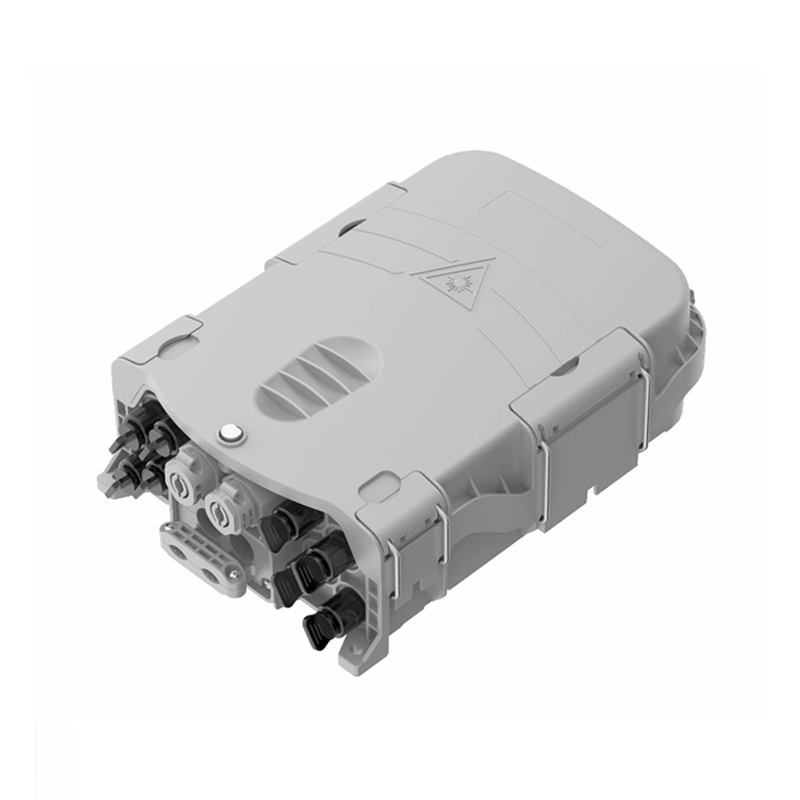
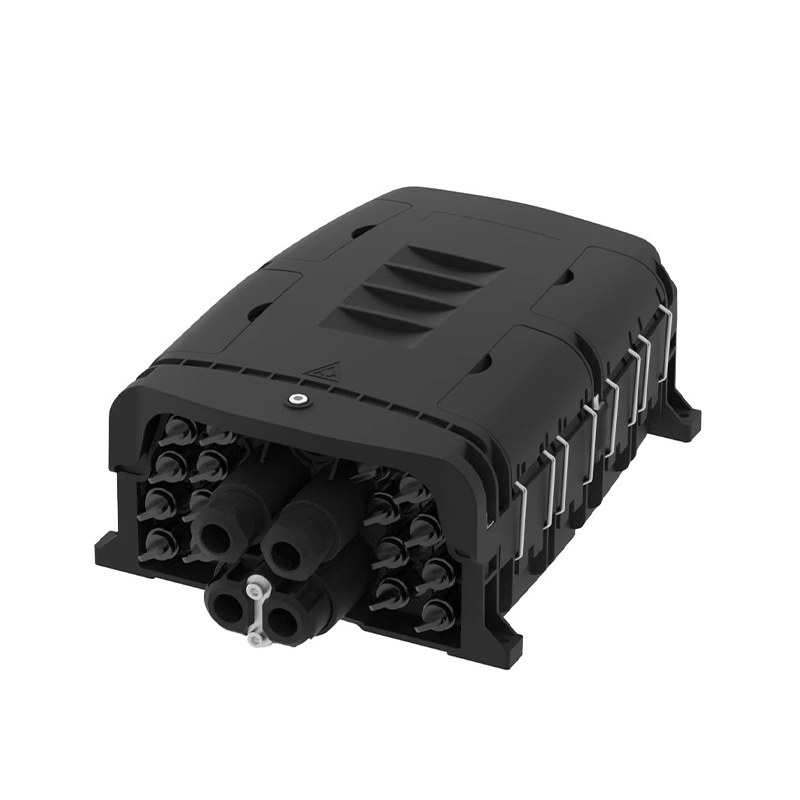
Ribbon closures usually hold 12 fibers per tray, so a 288-fiber cable needs at least 24 tray positions plus spare. Horizontal inline closures suit duct and buried routes where mid-span access is needed, while vertical dome closures are common on aerial and direct-buried spans. Check tray capacity, sealing method and cable entry count against the real outer diameter, not against the fiber count alone.
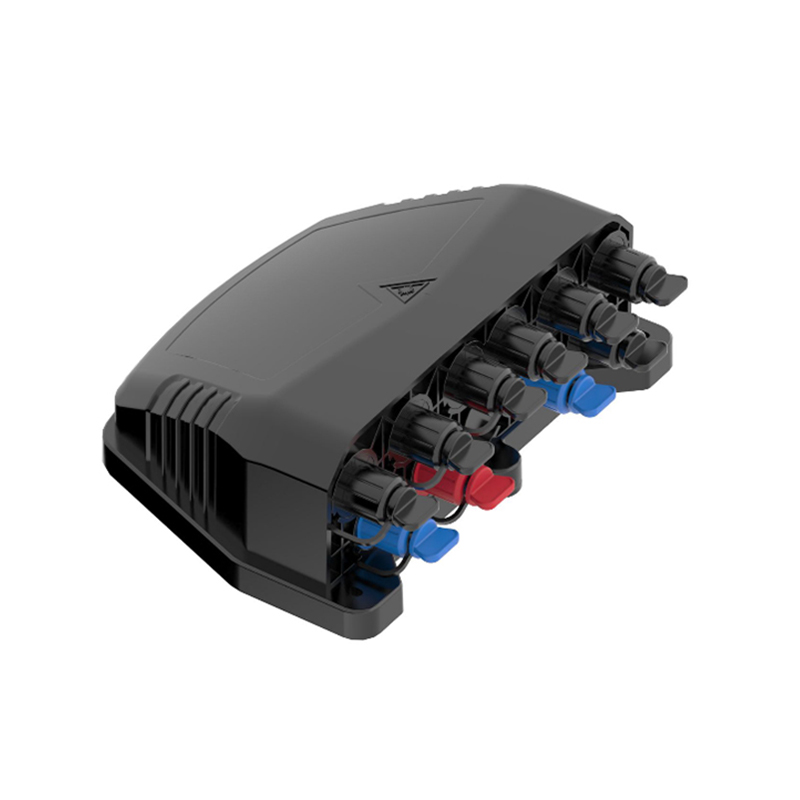
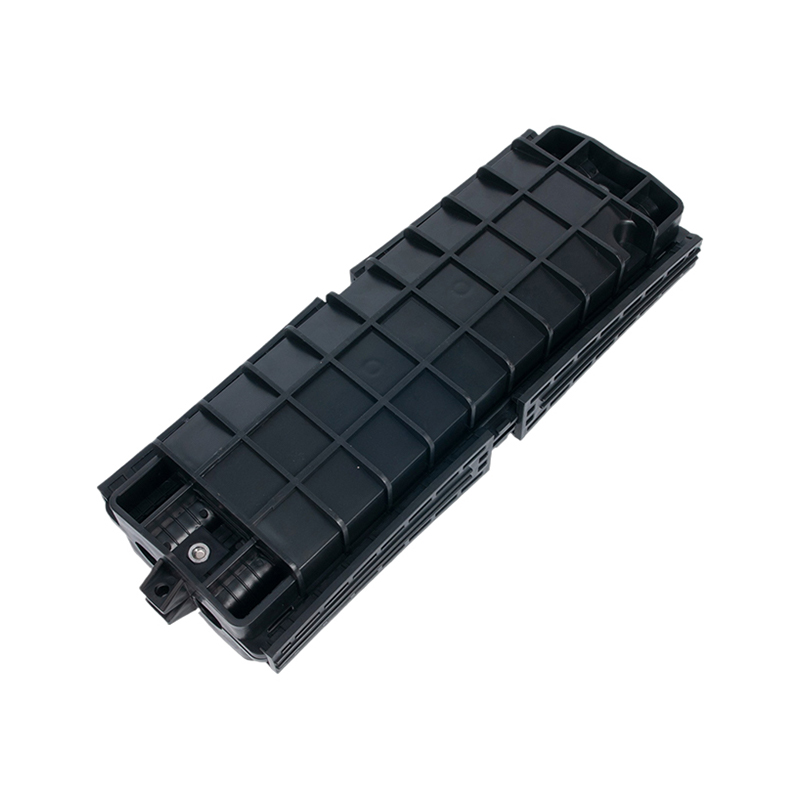 GSGSC001 Horizontal Fiber Optic Splice ClosureHorizontal splice closure that shields spliced fibers from moisture, dust, mechanical stress, and temperature changes for reliable, long-lasting connections.View Product →
Termination and patch panels
An ODF or distribution box has to terminate the same fiber count the cable delivers. A 48-port frame covers a single 48-fiber cable, while a 288-fiber backbone typically lands on a 288-port frame or several 96-port frames linked by patch cords, with bend radius respected at the entry and in the slack storage area.
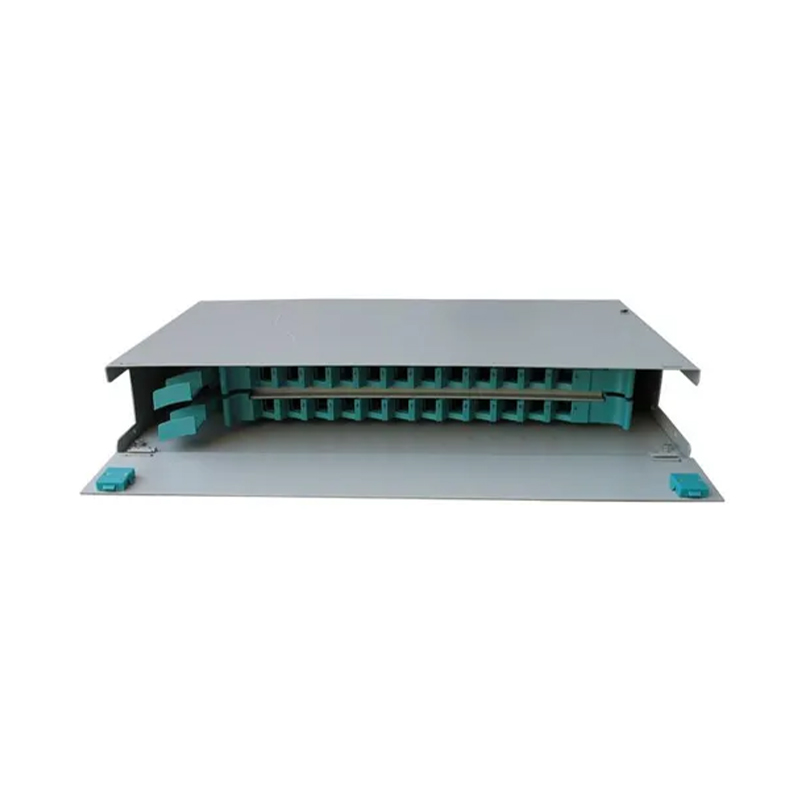 GSG-ODF-48A ODF Fiber Optic Distribution FrameGSG-ODF-48A ODF frame with integrated cable management for neat organization, reduced damage risk, and easier maintenance.View Product →
Patch cords and splitters
From the frame outward, the argument shifts to connector loss and bend radius. Bend-insensitive patch cords and compact PLC splitters let the same small enclosures serve more subscribers without a cabinet upgrade.
Common Procurement Mistakes to Avoid
- Ordering by fiber count alone. Two 288-fiber cables can differ by six millimetres in diameter, which changes duct fill, tray loading and closure entries.
- Ignoring duct fill. A cable that fits is not the same as a cable that can be pulled safely through a long, angled duct run.
- Assuming ribbon is hard to splice. Mass fusion splicing of 12-fiber ribbons is often faster than single-fiber work once the crew has the right trays and splicer.
- Forgetting mid-span access. A slack loop or access point added later is far cheaper if tray and closure capacity were planned at the start.
- Skipping factory test data. Ask for attenuation per fiber, OTDR traces and a stated length tolerance instead of a generic declaration of conformity.
Frequently Asked Questions
How many fibers can a high density cable hold?
Rollable ribbon cables of 1,728 fibers are routinely supplied for metro and data center backbones, and designs above 3,000 fibers exist for specialised routes. The practical ceiling is set by the duct, the closure tray count and the splicing method, not by the glass itself.
Does higher density reduce optical performance?
No. Density is a packaging property. Attenuation and bend loss come from the fiber grade and from process control during cabling, so a 12 mm cable and a 17 mm cable can carry identical G.652.D or G.657.A2 fiber and meet identical limits.
Can high density cable be installed by blowing?
Microcables are the usual choice for blowing because they are light and made for microduct. Larger ribbon cables are normally pulled, or installed in pre-lubricated ducts with tension monitoring; ask which method the jacket and tensile rating actually support.
Do I need different hardware for a high-count cable?
Usually three items change: the closure and tray set must match ribbon counts and cable entries, the panel must terminate the delivered fiber count, and the patch cords should be bend-insensitive so tighter routing inside the enclosure adds no loss.
High density fiber optic cable is best treated as one part of a system. The glass sets the link budget, the construction sets the duct and tray requirements, and the closures, panels and cords decide how quickly the route can be built and later expanded. Match the outer diameter to duct fill, the fiber grade to the bend environment, and the tray capacity to the fiber count, and the density advantage survives the first splice.
If you are weighing a specific route, send the duct size, fiber count and installation method, and contact our team for a cable and hardware recommendation that fits both the budget and the trays.