English
 Español

 Inquiry
For links longer than 100 meters or any link that must scale beyond 10 Gbps, fiber optic cable is the right medium. Copper remains a practical choice for short runs inside a rack or to a desktop. Today's networks often combine both, so understanding their performance, cost, and installation differences is essential before you buy.
Here is the bottom line: fiber wins on bandwidth, distance, and immunity to electromagnetic interference, while copper wins on upfront cost, tool simplicity, and durability in harsh pull-through applications. Many teams buy cabling before checking distance, power budgets, and environmental conditions. That mistake leads to rework and premature network upgrades. Let distance and bandwidth goals drive your decision first; this guide gives you the criteria to write a specification that will not be outdated in five years.
Content
- 1 Copper and Fiber Optic Cables: What They Are
- 2 Key Differences in Performance and Reliability
- 3 When to Choose Copper and When to Choose Fiber
- 4 Cost Considerations: Initial and Long-Term
- 5 Installation and Maintenance: What Contractors Should Know
- 6 Frequently Asked Questions
- 7 Making the Right Choice for Your Network
Copper and Fiber Optic Cables: What They Are
Copper twisted-pair cables transmit data as electrical signals over solid conductors, while fiber optic cables transmit data as pulses of light through a glass or plastic core. This fundamental difference drives every other comparison in bandwidth, reach, and reliability.
Copper cables are categorized by performance class, with Cat5e supporting 1 Gbps, Cat6 supporting up to 10 Gbps at short distances, and Cat6a offering 10 Gbps up to 100 meters. Fiber optic cables fall into two main families: single-mode, used for long-distance carrier and campus links, and multimode, used for shorter runs inside data centers and buildings.
Within these categories, you will also find varying jacket ratings, armor options, and core counts. For example, outdoor fiber cables such as GYTA53 add a steel tape armor layer to protect against rodents, moisture, and mechanical stress in direct-buried or ducted installations. Copper cables with PVC jackets perform fine inside, but they will break down quickly outdoors.
Key Differences in Performance and Reliability
Fiber optic cable delivers higher throughput over far greater distances with no electromagnetic noise, while copper cable still works for short enterprise links but its signaling method places hard limits on reach.
Comparison of copper and fiber optic cable characteristics
| Property | Copper Twisted-Pair | Fiber Optic |
|---|---|---|
| Max bandwidth | Up to 10 Gbps per link | 100 Gbps+ per link |
| Typical run length | 100 m for 1000BASE-T | Up to 80 km for single-mode |
| Interference immunity | Susceptible to EMI and crosstalk | Immune to EMI and crosstalk |
| Data security | Easier to tap | Harder to tap |
| Installation skills | Basic crimp tools | Fusion splicer and OTDR |
| Material cost | Lower | Higher |
The practical impact is simple: a copper link can satisfy a single user to a nearby switch, but if you are distributing bandwidth across a campus, crossing between floors, or planning for future speed, fiber is the safer investment.
Security also favors fiber. Copper acts as an antenna and leaks signals that are relatively easy to capture with test equipment. Because fiber transmits light, it is much harder to tap without disrupting the connection. For high-security facilities, this is a decisive factor.
When to Choose Copper and When to Choose Fiber
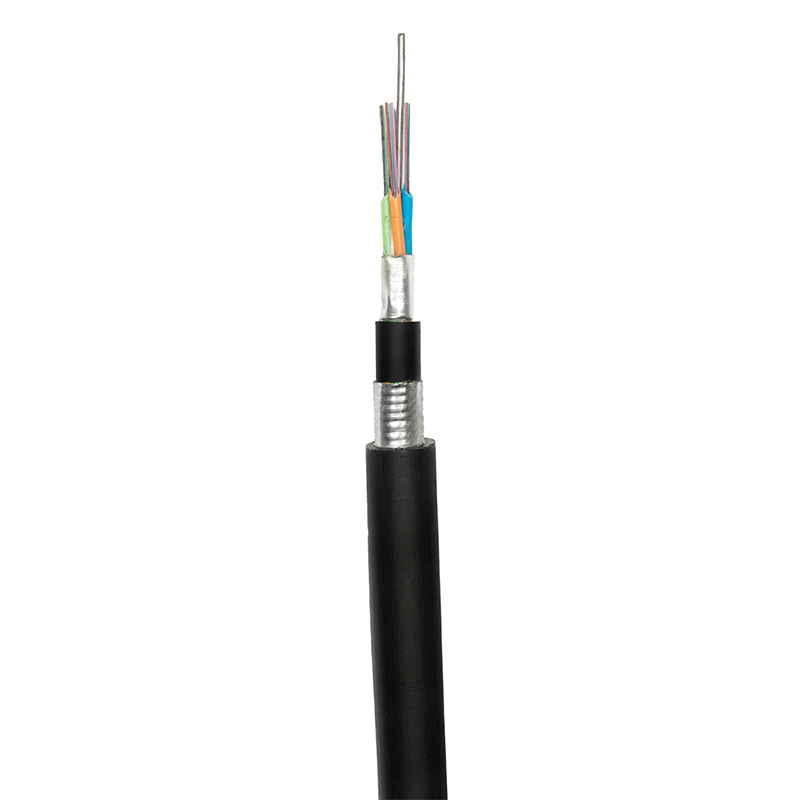 GYTA53 Outdoor Fiber Optic Cable for Direct Burial and Duct InstallationThis rugged outdoor cable supports multiple installation methods and low bending loss, making it a reliable choice for secure, long-term fiber networks that avoid copper's signal leakage risks.View Product →
Choose copper for access-layer connections lower than 10 Gbps within the same room. Choose fiber for any link that crosses a building, runs outdoors, or needs to support future upgrades without recabling.
- Copper is still preferred for console cables, legacy telephones, and short intra-rack patch connections where the budget is tight and the distance is under 10 meters.
- Fiber is mandatory for backbone runs between floors in an enterprise building, carrier access, and data center spine-to-leaf links where cable runs routinely exceed 100 meters.
- Outdoor plant should almost always be fiber. Copper cannot survive the distance, lightning strikes, and ground potential issues that outdoor links face. Armored outdoor fiber cables like GYTA53 handle those conditions with the required physical protection.
Do not assume that fiber is always more difficult. Pre-connectorized ODN solutions now allow outdoor drop installers to plug in a pre-terminated box and waterproof patch cord instead of field splicing every connection. This drastically reduces the hidden cost of skilled labor.
Cost Considerations: Initial and Long-Term
Fiber material and termination costs are higher than copper, but the total cost of ownership can favor fiber when the network requires higher speeds, longer distances, or lower maintenance over a five-year window.
Typical cost and maintenance comparison
| Factor | Copper | Fiber |
|---|---|---|
| Per-port material cost | Lower | Higher |
| Installation labor | Lower | Higher |
| Testing and troubleshooting | Simple link testers | OTDR testers, more training |
| Scalability | Frequent upgrades require recabling | Future speeds mostly need new electronics only |
| Long-term asset value | Depreciates quickly | Retains value longer |
Consider a practical example: building a 100-meter link that will need 10 Gbps next year. A Cat6a copper run may require active switches at both ends to reach the speed, but a single-mode fiber point-to-point link can carry it directly with optics. Once you add the switch cost and the potential for recabling, the copper option often loses the economic argument.
If your project has a short design life and 100-meter runs, copper is the economical choice. If the network needs to serve more users or more bandwidth within three to five years, fiber saves recabling labor.
Installation and Maintenance: What Contractors Should Know
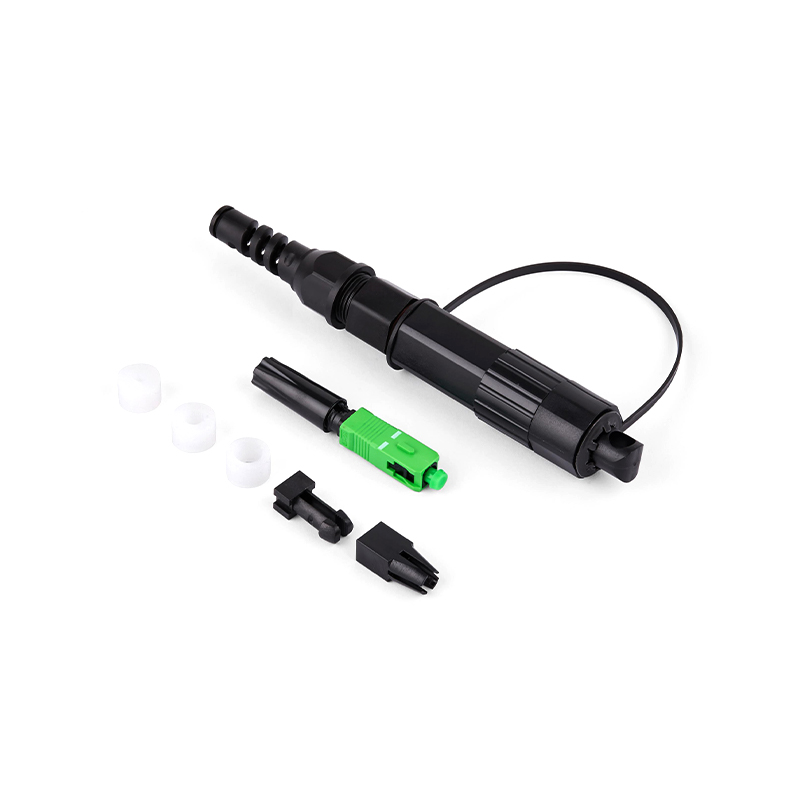
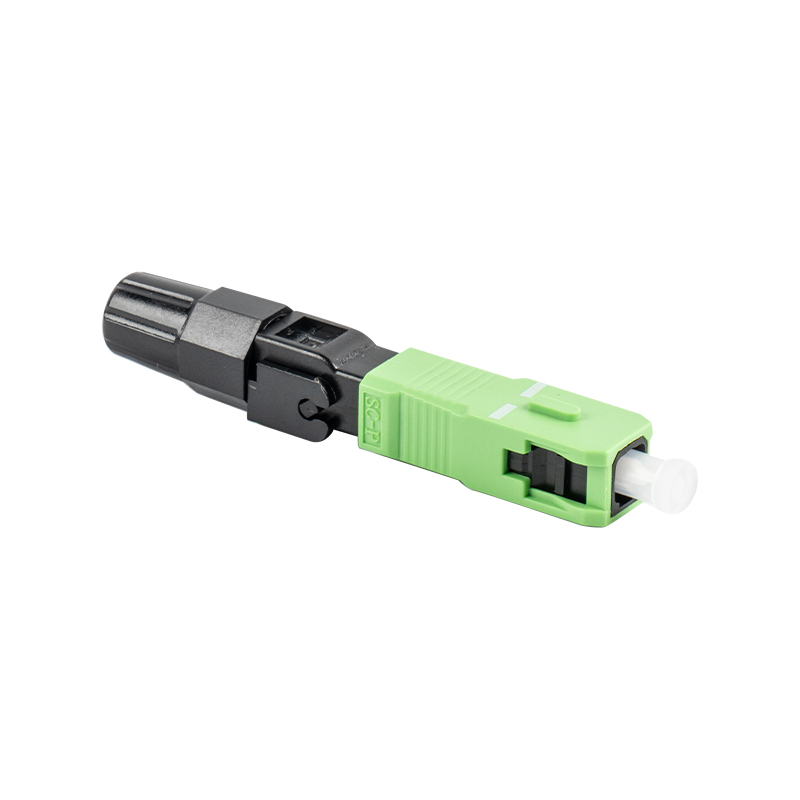
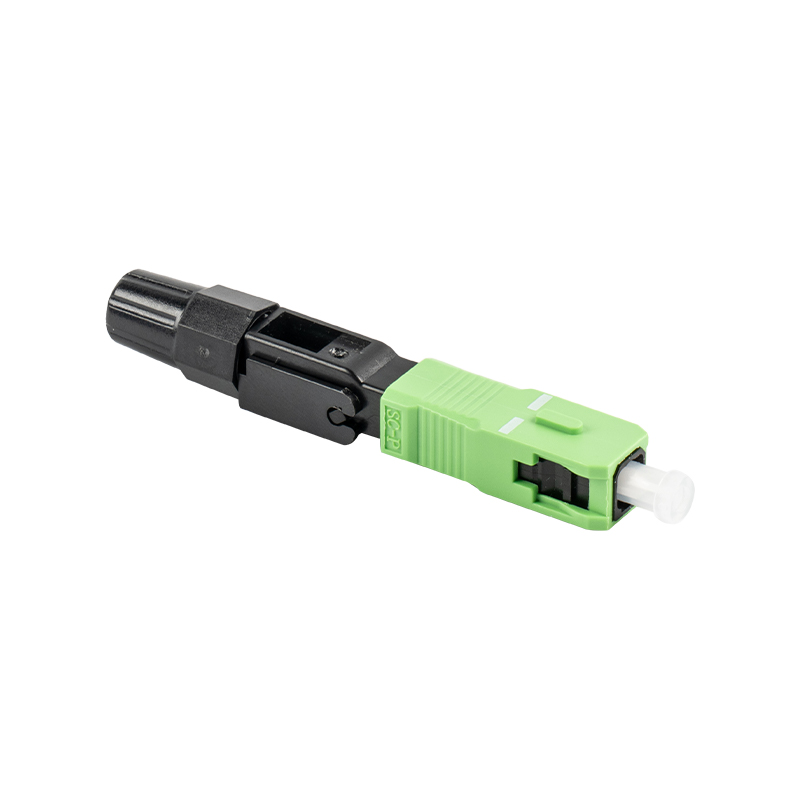
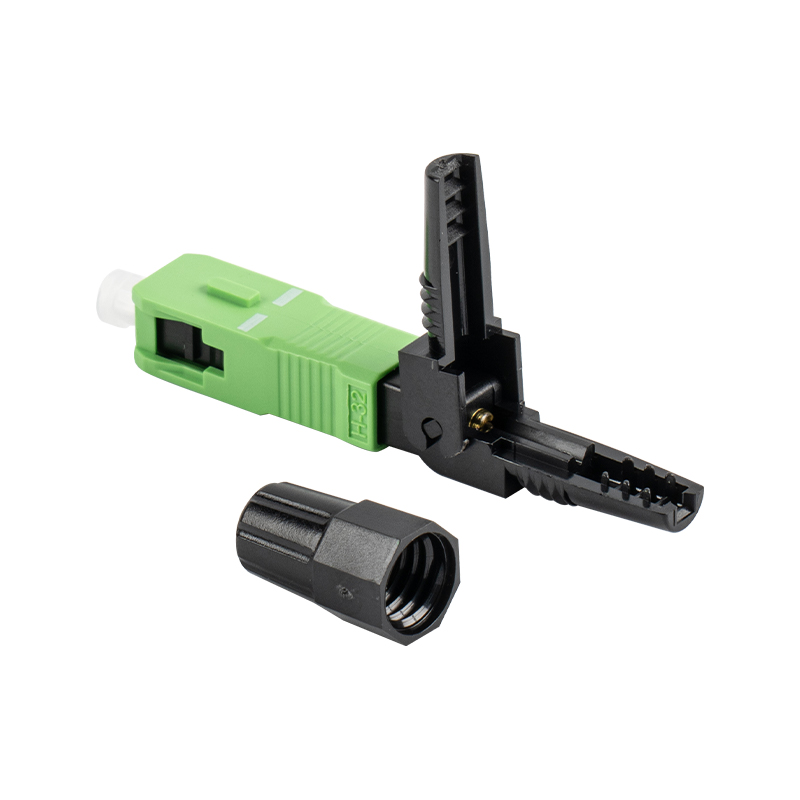 Tool-Free Vertical Fiber Optic Fast Connector (60mm APC)Enable quick, on-site fiber termination without welding or adhesives, saving labor and improving efficiency. Compatible with various cable diameters, it simplifies deployment for future network upgrades.View Product →
Copper termination is straightforward with RJ45 connectors and crimp tools. Fiber termination traditionally requires fusion splicing, but modern field-assembly connectors significantly reduce that burden.
Quick-connect SC and LC connectors let a contractor build an on-site termination without a fusion splicer. Choose a connector with the correct polish type and cable diameter—0.9 mm, 2.0 mm, or 3.0 mm—to match your cable. UPC connectors are fine for most indoor links, while APC connectors are preferred for RF video and high-return-loss applications.
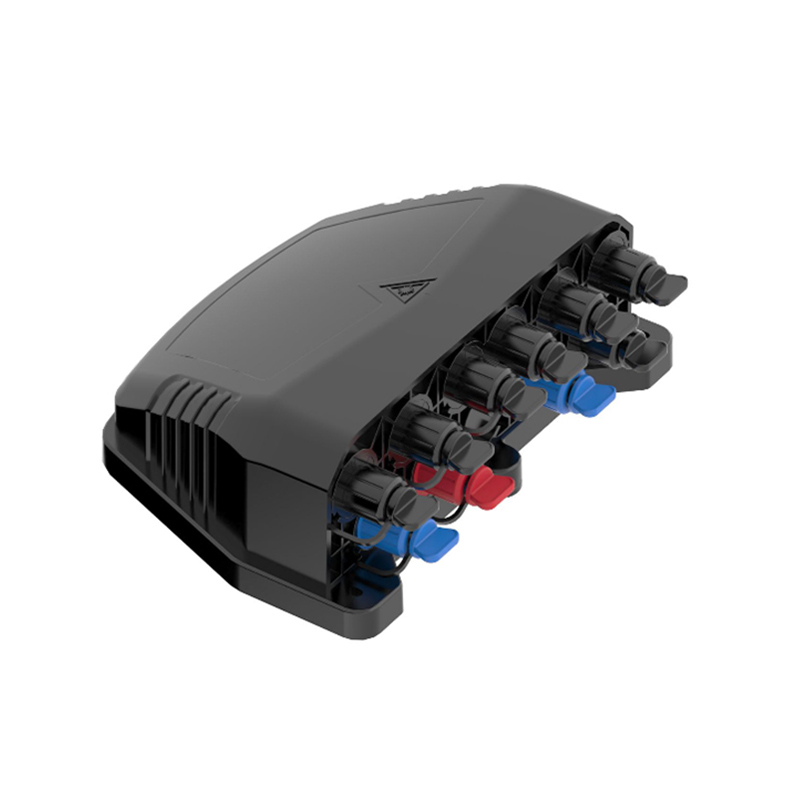
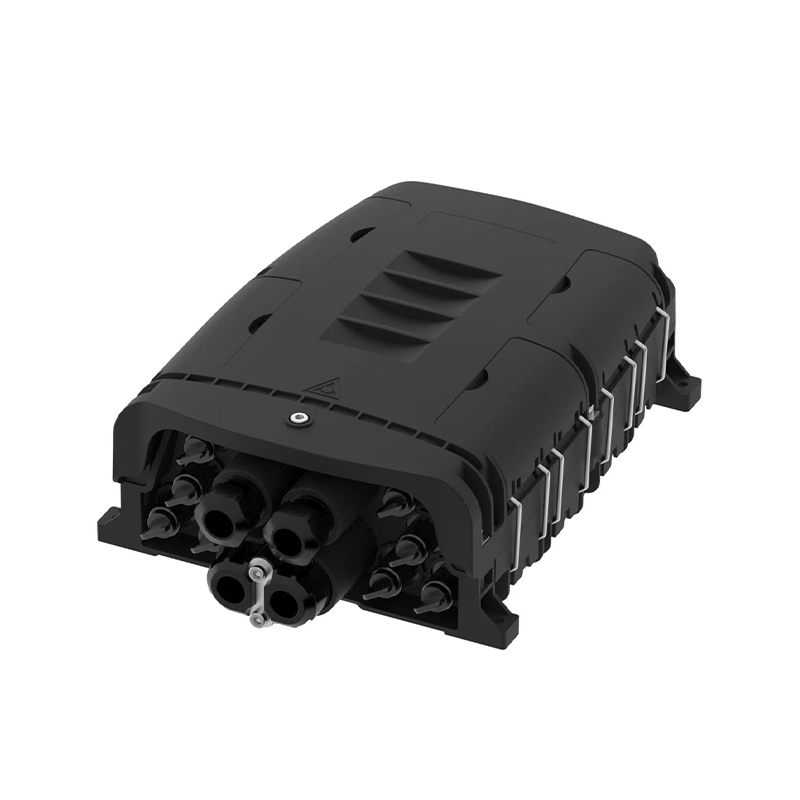
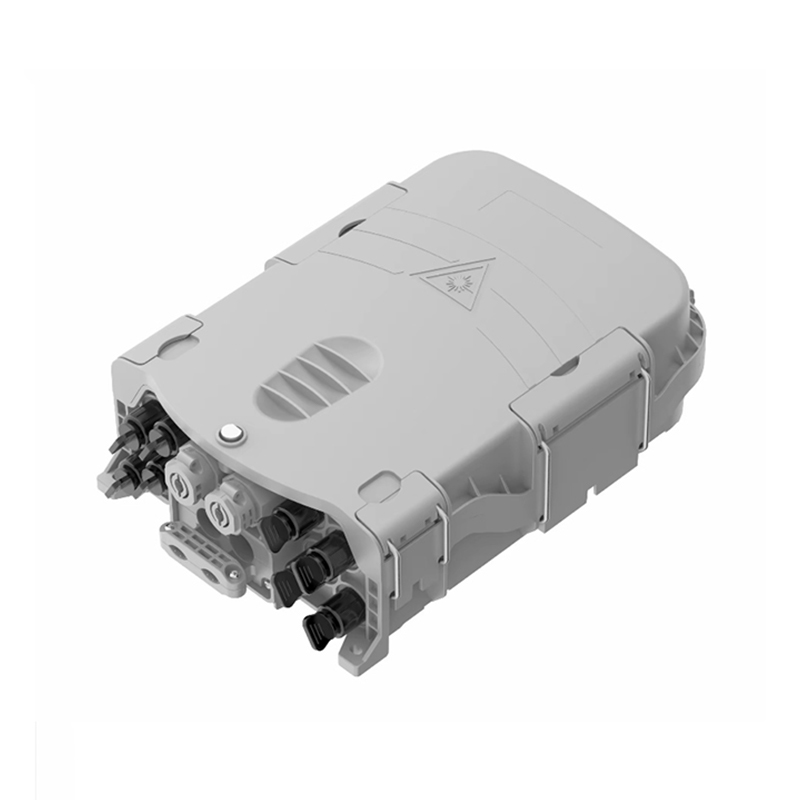
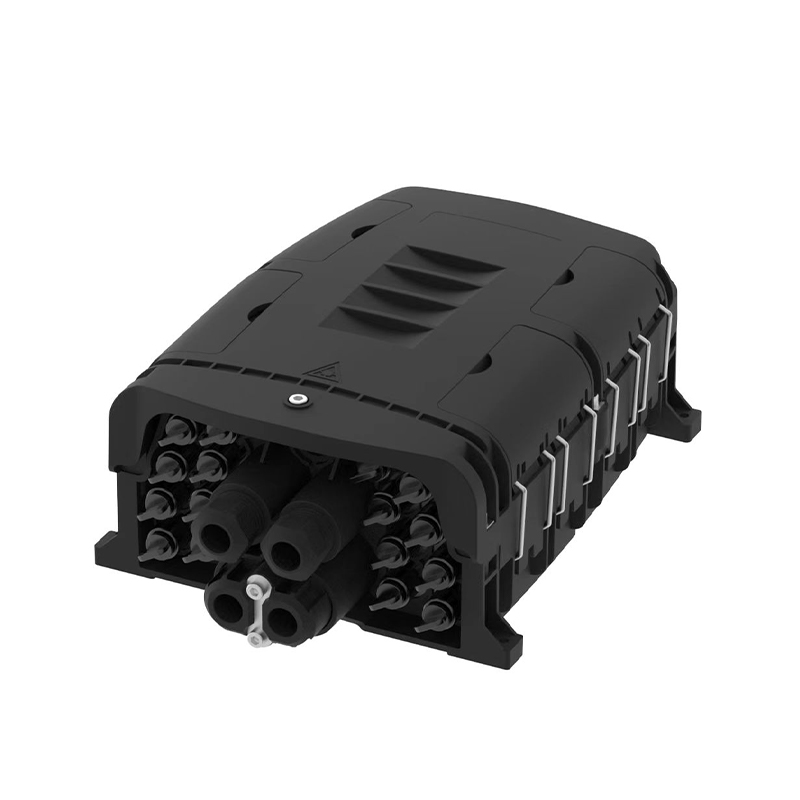
Pre-connectorized ODN solutions further simplify outdoor rollout by eliminating splicing at every drop point. Use preterminated boxes and water-resistant patch cords to cut field labor and improve consistency, especially for FTTH and distributed splitter networks.
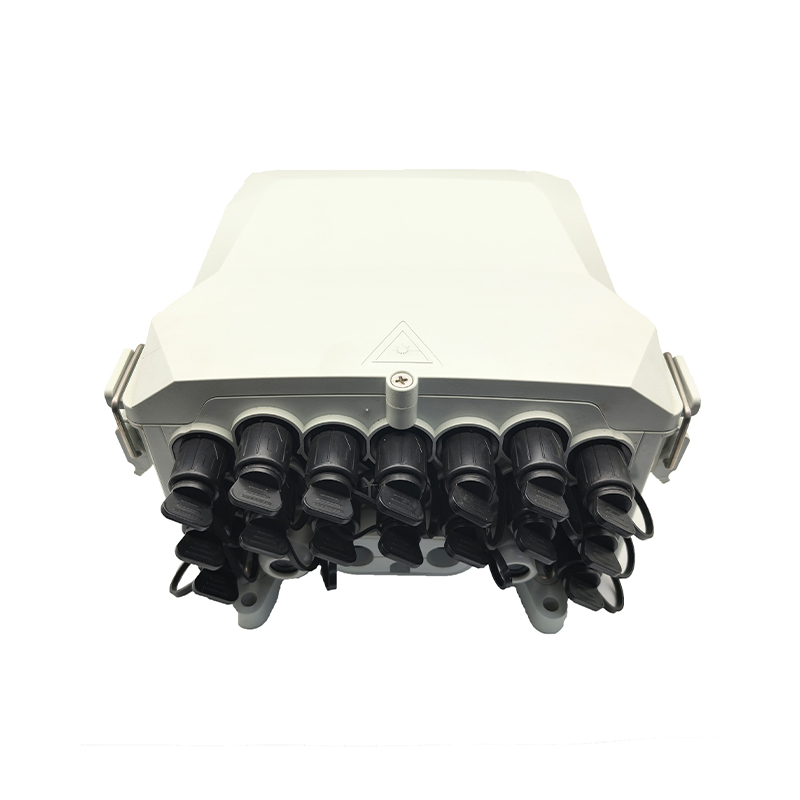
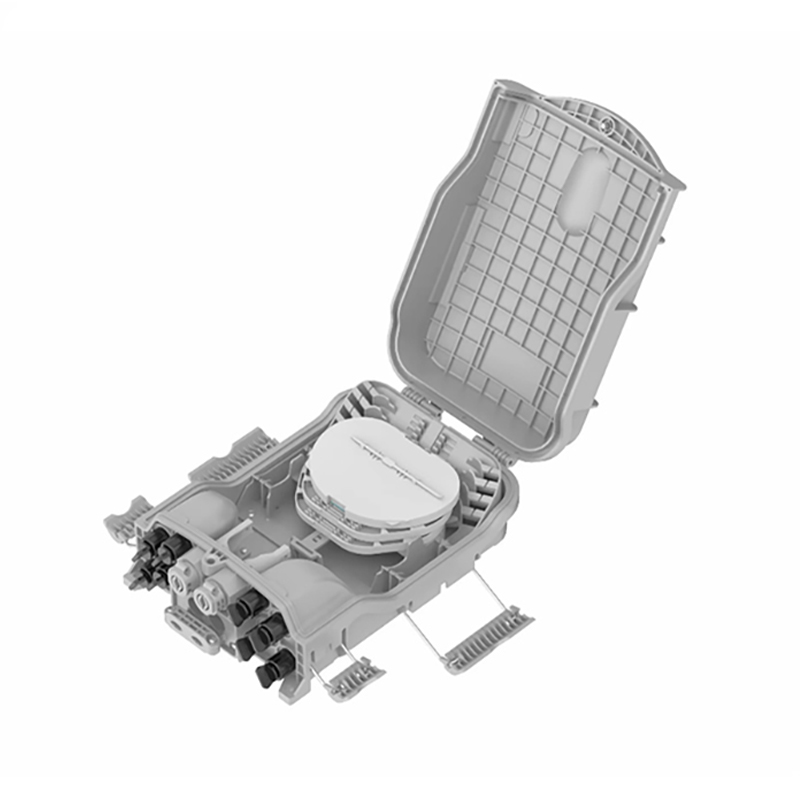 Pre-connected Waterproof NAP Box GSG08BThis waterproof box organizes and manages fiber connections, enhancing reliability and simplifying maintenance. Ideal for preterminated ODN solutions, it reduces field labor and improves consistency in FTTH networks.View Product →
Regardless of the medium, always document your test results. Copper link testers are cheap and fast; fiber links need an OTDR to verify splice loss and connector cleanliness. A simple clean-and-inspect step is often the difference between a one-time install and a service call weeks later.
For a deeper look at cable construction and component selection, read our guide on fiber optic cables.
Frequently Asked Questions
Is fiber faster than copper?
Yes. Copper commonly supports 1 Gbps and 10 Gbps at up to 100 meters. Fiber supports 100 Gbps, 400 Gbps, and higher over thousands of meters with the right transceivers.
Can copper cables run longer than 100 meters?
Structured cabling standards limit copper to 90 meters of permanent cabling plus patch cords. Repeaters or extenders exist, but they add cost and complexity. Fiber has no such limit in normal network design.
Is fiber optic cable hard to install?
It requires different skills, but modern pre-connectorized and field-terminated connectors make fiber installation straightforward. Fusion splicing still needs a splicer and practice, but the result is reliable and low-loss.
Is copper still used in fiber networks?
Yes. Many networks use fiber for the backbone and copper for the last few meters to a desktop or patch panel. Hybrid architectures let you match the technology to each link's requirements.
How do I know if I have fiber or copper?
Check the cable jacket marking. Copper cables show category ratings like Cat5e, Cat6, or Cat6a. Fiber cables usually have "Fiber" or a core/cladding number such as 50/125 or 9/125 printed on the jacket. When in doubt, insert a flash into the connector; fiber transmits light, copper does not.
Making the Right Choice for Your Network
Select copper when you need a simple, cheap, short link and the distance is well under 100 meters. Select fiber when you need long distance, high bandwidth, electromagnetic noise immunity, or future-proof capacity.
At Ningbo Goshining, we supply fiber optic cables, fast connectors, PLC splitters, distribution boxes, and pre-connectorized ODN solutions to help network contractors and system integrators build reliable connections. Talk to our team for site-specific recommendations and cable size selection.