English
 Español

 Inquiry
Industry News
Home / News / Industry News / What Are the Common Pitfalls When Managing Patch Cords in a Fiber Optic Terminal Box?
2026-04-10
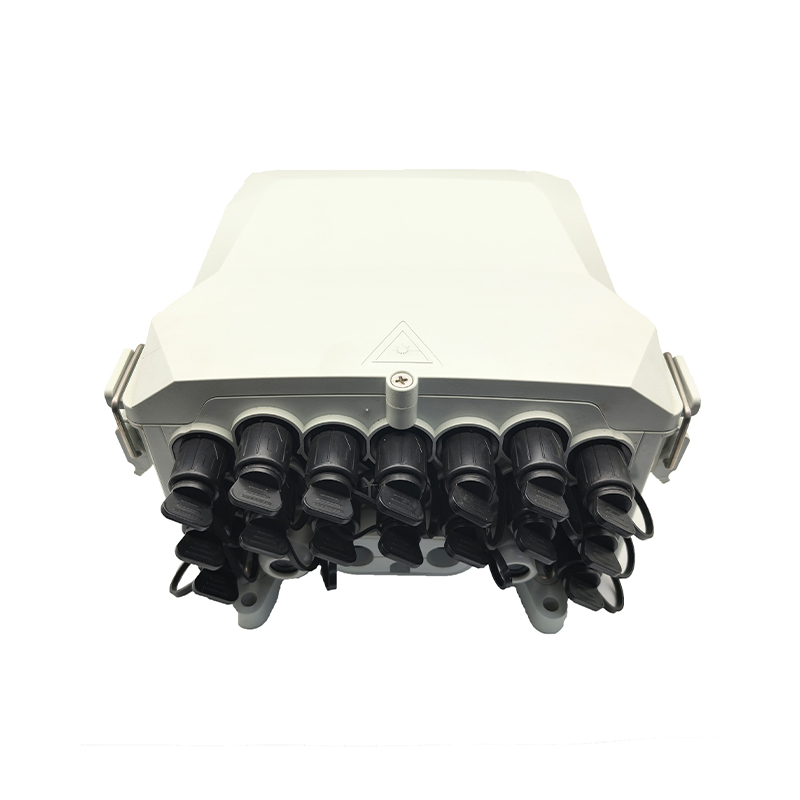
The primary pitfalls in managing patch cords within a Fiber Optic Terminal Box include violating the minimum bend radius, lack of organized routing, insufficient labeling, and neglecting end-face cleanliness, all of which lead to signal loss and physical fiber damage. Effective management ensures network longevity, reduces insertion loss, and simplifies future maintenance by maintaining a clean, logical pathway for every optical connection.
Content
Excessive bending of fiber patch cords causes micro-bends and macro-bends, leading to immediate signal attenuation or permanent fiber breakage.
In the cramped environment of a Fiber Optic Terminal Box, it is tempting to tuck cables into tight corners to save space. However, glass fibers have a physical limit to how much they can curve. When a patch cord is bent beyond its specified minimum bend radius (typically 10 to 15 times the outer diameter), the light leaks out of the fiber core into the cladding. This results in high dB loss and can even cause stress fractures over time.
To avoid this, installers should utilize the built-in radius-limiting mandrels and ensure that any slack is looped loosely. Specialized bend-insensitive fibers (such as G.657.A1/A2) can provide more flexibility, but they are not a substitute for proper cable management discipline within the enclosure.
Disorganized routing creates "spaghetti cabling," which impedes airflow, complicates troubleshooting, and puts mechanical stress on lower-layer patch cords.
A Fiber Optic Terminal Box often serves as a high-density hub. Without a predetermined routing plan, the interior quickly becomes a chaotic mess of overlapping wires. This congestion makes it nearly impossible to trace a single fiber patch cord without disturbing others. When one cable is buried under a dozen others, the weight and tension of the top layers can crush the fibers at the bottom of the pile.
Strategic routing involves separating incoming distribution cables from outgoing patch cords. Using vertical and horizontal management rings within the wall mount terminal box or rack enclosure ensures that each cord follows a dedicated path. This structure not only protects the integrity of the glass but also makes the system aesthetically professional.
Failing to implement a standardized labeling system leads to prolonged downtime and high error rates during network reconfigurations.
In a fiber optic network, knowing "what goes where" is as critical as the hardware itself. A common pitfall is relying on memory or handwritten notes that fade over time. Without clear, durable labels on both the fiber optic patch cord and the adapter port, technicians are forced to use "tug-and-trace" methods or visual fault locators to identify lines, which increases the risk of accidental disconnection.
The best practice is to follow the TIA-606-C standard for labeling. Every port on the Fiber Optic Terminal Box should be numbered, and every patch cord should have a wrap-around label at both ends indicating its source and destination. This documentation should be mirrored in a digital database for remote management.
The following table compares the long-term impacts of disciplined management versus common management pitfalls.
| Feature | Structured Management | Unstructured (Pitfalls) |
| Signal Integrity | Low insertion loss; consistent performance. | High attenuation due to macro-bends. |
| Maintenance Speed | Fast; easy to identify and swap cords. | Slow; requires tracing through "spaghetti." |
| Scalability | Easy to add new connections. | Difficult; box becomes overstuffed quickly. |
| Physical Safety | Minimized risk of accidental breakage. | High risk of pinching or crushing cords. |
Plugging dirty connectors into a Fiber Optic Terminal Box causes permanent damage to the adapter and the fiber end-face.
Dust is the enemy of optical fiber. Even a microscopic speck of dust on a patch cord connector can act like a boulder in the path of light, causing massive reflection and loss. A frequent mistake is assuming that "new" means "clean." Many installers remove the dust caps and plug the cords directly into the fiber optic distribution box without inspection.
Always follow the "Inspect Before You Connect" workflow. Use a fiber microscope to check the end-face. If contaminated, use lint-free wipes and specialized cleaning solvent (99% isopropyl alcohol) or a "one-click" cleaner. This prevents cross-contamination between the patch cord and the internal pigtails of the terminal box.
Using cables that are too long creates unmanageable slack, while cables that are too short result in tension that pulls on the connectors.
Finding the "Goldilocks" length for a fiber patch cord is essential. When cords are excessively long, the Fiber Optic Terminal Box becomes a storage unit for extra coils, which contributes to heat retention and physical clutter. Conversely, if a cord is too short, it is often stretched tight across the enclosure (known as "guitar stringing"). This tension puts mechanical stress on the fiber optic adapter and can lead to intermittent connectivity.
Measure the distance through the routing path (not a straight line) and add a small amount of "service loop" slack. Standardizing on 1m, 2m, or 3m lengths helps, but custom lengths should be used if the standard ones lead to excessive clutter in high-density patch panels.
Failing to secure excess fiber leads to accidental snags when the box door is opened or closed.
Even with the correct cable length, there is always some slack. If this slack is not secured with Velcro ties or stored in designated trays, it can migrate toward the door hinge or the latch of the Fiber Optic Terminal Box. Many fibers have been "guillotined" simply by a technician closing the metal door on a stray loop of glass.
Avoid using plastic zip ties, which can easily be overtightened and crush the fiber jacket. Instead, use soft hook-and-loop fasteners. Ensure that the fiber storage tray is used to its full potential, keeping the internal environment clean and safe for the delicate glass strands.
Conclusion: It is highly discouraged; use Velcro straps instead. Standard zip ties are rigid and can apply "point pressure" on the fiber, leading to micro-bending loss. Velcro is adjustable and much gentler on the cable jacket.
Conclusion: Usually 10 times the cable's outer diameter for G.652D fiber. For most standard patch cords (2.0mm or 3.0mm), a radius of about 30mm is safe. For bend-insensitive fiber, this can be reduced, but 30mm remains the industry gold standard for safety.
Conclusion: Every time a connection is made or broken. Air-borne contaminants enter the adapter as soon as a plug is removed. Cleaning both the patch cord and the internal adapter sleeve ensures a low-loss connection.
Proactive management of the Fiber Optic Terminal Box is the most cost-effective way to prevent network downtime and signal degradation.
By avoiding the pitfalls of poor bend radius control, disorganized routing, and lack of cleanliness, you ensure that your optical fiber infrastructure performs at its peak. Whether you are managing a small FTTH terminal box or a massive data center distribution frame, the principles remain the same: protect the glass, label everything, and keep it clean. High-quality cable management is not just about aesthetics; it is about the fundamental reliability of the data moving through your network.
Keywords: Fiber Optic Terminal Box, Patch Cord Management, Fiber Cable Routing, Optical Fiber Loss, Cable Management Pitfalls, Fiber Optic Enclosure.

No.255 Lianfei Road, KandunIndustrial Park, Cixi City, ZhejiangProvince, China
Email: [email protected]
Tel: +86 18367407397
Copyright ? Ningbo Goshining Communication Technology Co., Ltd. Fiber Optic Solutions Manufacturer Fiber Optic Products Factory