English
 Español

 Inquiry
Deploying 5G means deploying more fiber optic cable, not less. Every 5G base station, from a macro site to a street-level small cell, must be connected to the transport network by optical fiber, because the radio link alone cannot carry the aggregated traffic back to the core. This guide explains what 5G fiber optic cable is, which cable types are used in real deployments, and how to specify the right one for your project. For a broader review of cable construction, see our fiber optic cable overview.
Content
Why 5G Networks Need Fiber Optic Cables
5G needs fiber because wireless links only cover the final few feet between the device and the antenna; everything behind the antenna requires a wired transport network. A 5G radio can deliver multi-gigabit speeds to a phone, but the base station that manages those radio signals still needs to exchange traffic with the core network through a physical medium. Optical fiber is the only medium that consistently provides the bandwidth, latency, and future capacity headroom required.
The main reasons are straightforward:
- Fronthaul connections between remote radio units and baseband units require very low latency, often in the microsecond range, which microwave links struggle to guarantee over long distances.
- Small cells are installed on poles, walls, and street furniture, and each one needs power and fiber connectivity, often in areas with limited space.
- 5G traffic volumes grow quickly as video, IoT, and fixed wireless access ride the same transport network, so operators prefer fiber over wireless backhaul to avoid repeated upgrades.
- Fiber optic cable supports 25G, 50G, 100G and faster transmission on the same fiber, making it a future-proof foundation for 6G planning.
What Exactly Is a 5G Fiber Optic Cable?
A 5G fiber optic cable is not a separate cable standard; it is a single-mode optical cable specified to meet the performance, environment, and fiber-count needs of a 5G transport network. In practice, most 5G cable uses G.652D or G.657A2 single-mode fiber, which gives low attenuation around 1310 nm and 1550 nm and supports high-capacity WDM transmission.
What makes a cable "5G-ready" is not a special fiber, but the way the cable is built:
- Outdoor cables use moisture barriers, water-blocking tape or gel, and UV-resistant outer sheaths.
- Direct burial cables add steel tape or double-jacket armor.
- Aerial cables use all-dielectric or messenger-supported designs.
- Indoor cable sections use low-smoke zero-halogen (LSZH) jackets for safety.
- High-fiber-count cables, often 48 to 144 cores, are used in aggregation sections.
The same fiber core can serve a macro site, a small cell, or a fixed-line broadband network, which is why 5G fiber optic cable is more about route engineering than about a unique product label.
Key Types of Fiber Optic Cables Used in 5G Networks
Five cable families cover most 5G site builds: loose-tube outdoor cables, armored direct-burial cables, all-dielectric self-supporting aerial cables, optical ground wire, and indoor riser cables. The table below lists the common types and their typical 5G applications.
| Cable Type | Structure | Typical 5G Use |
|---|---|---|
| GYTA | Loose tube, aluminum tape | Duct runs between aggregation points and base stations |
| GYTS | Loose tube, steel tape | Duct routes needing extra crush and rodent resistance |
| GYTA53 | Double-jacket, armored | Direct burial near tower sites |
| ADSS | All-dielectric self-supporting | Aerial spans on utility poles |
| OPGW | Optical ground wire | Overhead power line routes |
| GJYXFCH | Indoor/outdoor drop cable | Small cell and FTTA outdoor drop connections |
For underground duct sections, a GYTA cable gives a good balance of cost and performance; we offer a GYTA fiber optic cable in standard single-mode configurations. Where steel-tape protection is preferred, the GYTS fiber optic cable is a reliable alternative. For overhead routes that do not have a separate messenger wire, an ADSS fiber optic cable for aerial routes avoids the need for metal strength members and simplifies pole installation.
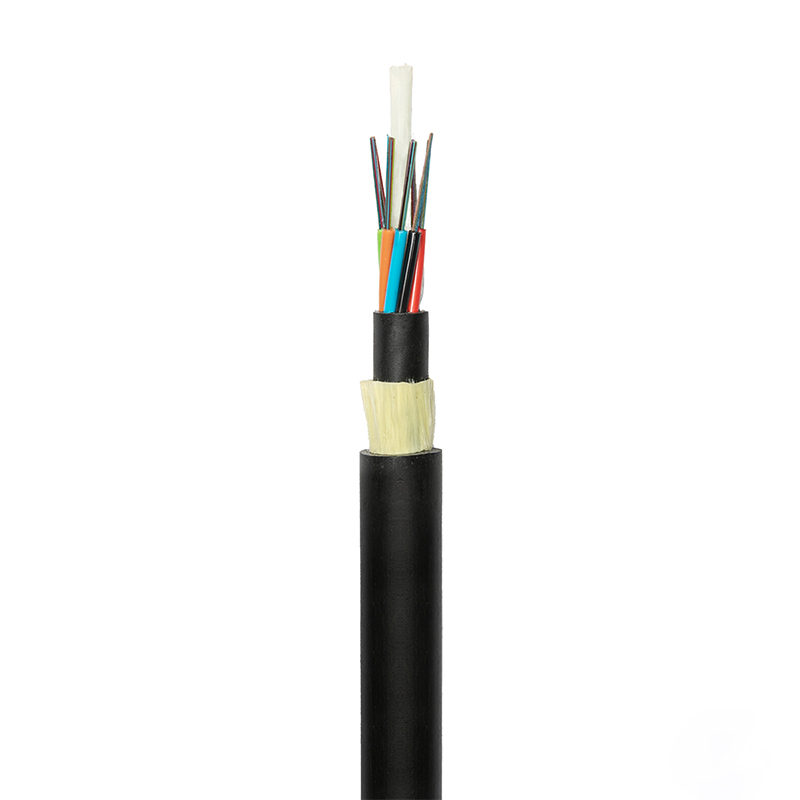 Wholesale Outdoor Fiber Optic ADSS Manufacturer, CompanyNingbo Goshining Communication is a China outdoor fiber optic ADSS manufacturer and outdoor fiber optic ADSS company, professional wholes...View Product →
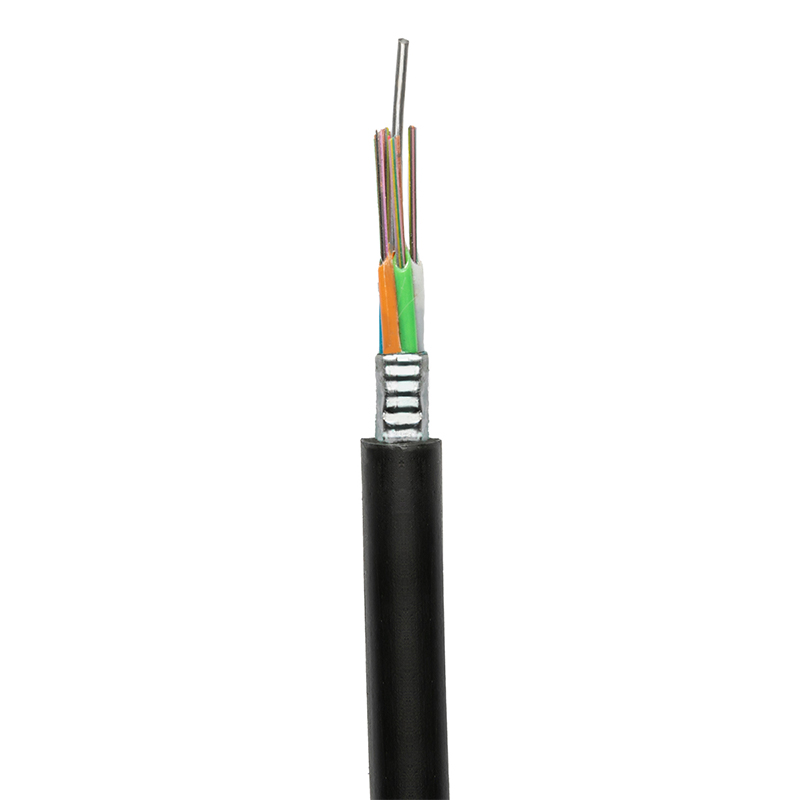 GYTS Fiber Optic Cable Manufacturer, Company - Ningbo Goshining Communication TeNingbo Goshining Communication is a China GYTS Fiber Optic Cable manufacturer and GYTS Fiber Optic Cable company, professional wholesale ...View Product →
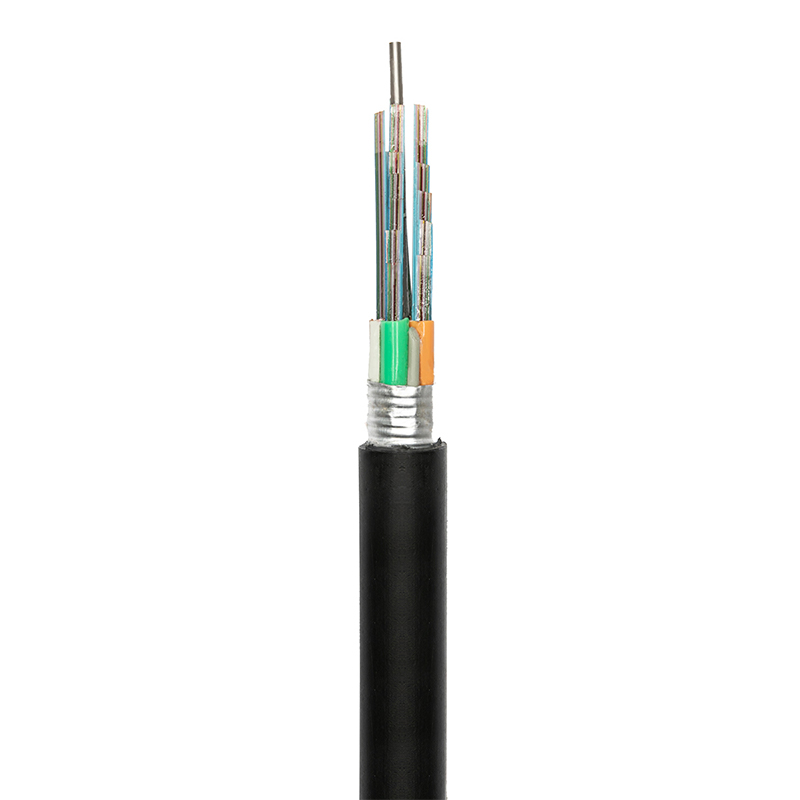 GYTA Fiber Optic Cable Manufacturer, Company - Ningbo Goshining Communication TeNingbo Goshining Communication is a China GYTA Fiber Optic Cable manufacturer and GYTA Fiber Optic Cable company, professional wholesale ...View Product →
How to Choose the Right 5G Fiber Optic Cable
The right 5G fiber optic cable depends on several key decisions: fiber mode, fiber count, sheath, water blocking, and installation route. Start with route distance and site topology, then work down to the cable structure.
- Fiber mode: Select single-mode fiber, normally G.652D for most links or G.657A2 when tight bends are unavoidable. Avoid multimode fiber in 5G outdoor transport because it limits distance and capacity.
- Fiber count: Plan at least 12 fibers per base station for redundancy. Aggregation links and central offices often need 48, 96, or 144 fibers because they combine multiple cell sites.
- Sheath and armor: Use PE sheath for outdoor duct and aerial, LSZH for indoor, and steel-tape armor for direct burial or rodent-prone environments.
- Water blocking: Choose gel-filled or dry water-blocking cable. Dry designs speed up splicing and are cleaner to install, while gel-filled cable is often more cost-effective for long underground sections.
- Installation route: Confirm whether the cable will be pulled through conduit, buried, lashed to a messenger, or installed on power poles. ADSS is preferred for aerial, while GYTA53 is preferred for trench burial.
It is also worth checking cabled fiber attenuation, minimum bend radius, and tensile strength before ordering. These parameters matter more than the cable type name because they determine whether splicing crews can install the cable without damaging fibers.
5G vs. Fiber Optic Internet: Understanding the Relationship
5G and fiber optic internet serve different points in the network, so comparing them as replacements is misleading. 5G is a wireless access technology that uses radio waves to reach end devices, while fiber optic internet uses optical cables to carry data directly to a home or office. The two technologies work best together: fiber provides the backhaul, and 5G provides the last hop.
| Aspect | 5G Wireless | Fiber Optic Internet |
|---|---|---|
| Transmission medium | Radio waves through air | Light pulses through glass fiber |
| Typical speed | 100 Mbps to 1 Gbps, shared among users | 100 Mbps to 10 Gbps, dedicated per line |
| Latency | 10 to 30 ms in normal conditions | 1 to 5 ms on local links |
| Reliability | Affected by weather, obstacles, and congestion | Very stable with minimal signal loss |
| Deployment | Faster to activate in new areas | Requires trenching, duct, or aerial cable installation |
| Best use | Mobile users, fixed wireless access, temporary sites | Homes, offices, data centers, and network backhaul |
The key point is that fixed wireless access can replace fiber at the customer edge, but the access point itself still needs a fiber optic link to the core. This is why operators expanding 5G coverage continue to increase their fiber cable inventory even when they are not building new fixed fiber lines.
Frequently Asked Questions About 5G Fiber Optic Cable
The answers below summarize the practical points buyers ask most often when planning 5G cable purchases.
Is 5G faster than fiber optic cable?
No. In terms of raw capacity and latency, fiber optic cable is faster and more stable than 5G radio. 5G is only faster when compared with older wireless technologies such as 4G LTE.
Does 5G require fiber optic cable?
Yes. Every 5G base station uses fiber for fronthaul, midhaul, or backhaul, even when the final hop to the user is wireless. The radio signal is only one part of the end-to-end network.
What type of fiber optic cable is used for 5G?
Operators typically use single-mode outdoor cable, usually G.652D or G.657A2, with 12 to 48 fibers per site depending on architecture. Armored versions are used for direct burial, and ADSS is used for aerial routes.
Can one fiber optic cable serve both 5G and fixed internet?
Yes. A single high-fiber-count cable can carry both mobile 5G traffic and fixed broadband traffic at the same time using different fiber pairs or WDM channels.
Does 5G fiber optic cable cost more than ordinary single-mode cable?
Not necessarily. The cable material cost depends on fiber count, armor, jacket, and water-blocking method, not on the "5G" label. Standard GYTA cable is often the most economical choice for 5G duct routes.
Every 5G project starts with a cable route survey, not a radio frequency plan. Once you know your distances, fiber count, and installation environment, you can pick the right cable with confidence. If you are specifying ducts, trenches, or pole routes, please contact our engineering team for assistance; we will help you match the cable structure to your site conditions.